
Hezbollah’s Financing Strategies: Recovering From War With Israel on FDD.org
In cooperation with the Foundation for Defence of Democracies, I published a policy memo, mapping out the rerouting methods Hezbollah has been engaged in to make use of $1 Billion annual budget, since early 2025, in a desperate attempt to reconstruct its military wing, following the IDF’s massive decapitation operation in late 2024. Relevant countermeasures are suggested to help policymakers combat the organization’s force buildup.
In cooperation with the Foundation for Defence of Democracies, I published a policy memo, mapping out the rerouting methods Hezbollah has been engaged in to make use of $1 Billion annual budget, since early 2025, in a desperate attempt to reconstruct its military wing, following the IDF’s massive decapitation operation in late 2024. Relevant countermeasures are suggested to help policymakers combat the organization’s force buildup.
Read the memo - HERE
𝗪𝗶𝗹𝗹 𝗛𝗲𝘇𝗯𝗼𝗹𝗹𝗮𝗵 𝗧𝘂𝗿𝗻 𝘁𝗼 𝗣𝗼𝗹𝗶𝘁𝗶𝗰𝗮𝗹 𝗔𝘀𝘀𝗮𝘀𝘀𝗶𝗻𝗮𝘁𝗶𝗼𝗻𝘀 𝗔𝗴𝗮𝗶𝗻?
𝗪𝗶𝗹𝗹 𝗛𝗲𝘇𝗯𝗼𝗹𝗹𝗮𝗵 𝗧𝘂𝗿𝗻 𝘁𝗼 𝗣𝗼𝗹𝗶𝘁𝗶𝗰𝗮𝗹 𝗔𝘀𝘀𝗮𝘀𝘀𝗶𝗻𝗮𝘁𝗶𝗼𝗻𝘀 𝗔𝗴𝗮𝗶𝗻? Recently, I was honored to participate in a meaningful initiative — a small but 𝗶𝗺𝗽𝗼𝗿𝘁𝗮𝗻𝘁 𝘀𝘁𝗲𝗽 𝘁𝗼𝘄𝗮𝗿𝗱 𝗱𝗶𝗮𝗹𝗼𝗴𝘂𝗲 𝗮𝗻𝗱 𝘂𝗻𝗱𝗲𝗿𝘀𝘁𝗮𝗻𝗱𝗶𝗻𝗴.
Recently, I was honored to participate in a meaningful initiative — a small but 𝗶𝗺𝗽𝗼𝗿𝘁𝗮𝗻𝘁 𝘀𝘁𝗲𝗽 𝘁𝗼𝘄𝗮𝗿𝗱 𝗱𝗶𝗮𝗹𝗼𝗴𝘂𝗲 𝗮𝗻𝗱 𝘂𝗻𝗱𝗲𝗿𝘀𝘁𝗮𝗻𝗱𝗶𝗻𝗴.
A friend and colleague encouraged me to contribute an article to @This is Beirut, a Lebanese news outlet. It was an opportunity I couldn’t turn down: to share an Israeli academic perspective on Hezbollah 𝗱𝗶𝗿𝗲𝗰𝘁𝗹𝘆 𝘄𝗶𝘁𝗵 𝗮 𝗟𝗲𝗯𝗮𝗻𝗲𝘀𝗲 𝗮𝘂𝗱𝗶𝗲𝗻𝗰𝗲, breaking — even slightly — one of the region’s most enduring barriers.
Before proceeding, I made sure that no one would be put at risk from this collaboration. I had to engage in careful back-channel consultations from my end, while the editorial team confirmed it was a calculated step they were ready to take.
But beyond the symbolism of this publication lies its essence — a hard look at the threat Hezbollah poses, not to Israel this time, but to Lebanon itself. Much of the discourse in Israel and the West focuses on Hezbollah’s regional aggression. This research turns the lens inward, exposing a darker dynamic: the danger of the organization reactivating 𝗨𝗻𝗶𝘁 𝟭𝟮𝟭 — 𝗶𝘁𝘀 𝗽𝗼𝗹𝗶𝘁𝗶𝗰𝗮𝗹 𝗮𝘀𝘀𝗮𝘀𝘀𝗶𝗻𝗮𝘁𝗶𝗼𝗻 𝗮𝗽𝗽𝗮𝗿𝗮𝘁𝘂𝘀 — to intimidate and eliminate opponents. The chilling message is unmistakable: any attempt to challenge or disarm Hezbollah could be met with silencing, even within the Shiite community.
The result is something I’m deeply proud of — perhaps the first of its kind: 𝗜𝘀𝗿𝗮𝗲𝗹𝗶 𝗿𝗲𝘀𝗲𝗮𝗿𝗰𝗵 𝗽𝘂𝗯𝗹𝗶𝘀𝗵𝗲𝗱 𝗼𝗻 𝗮 𝗟𝗲𝗯𝗮𝗻𝗲𝘀𝗲 𝗽𝗹𝗮𝘁𝗳𝗼𝗿𝗺.
Thank you to the team at This is Beirut for their courage and for providing a space for this necessary dialogue.
📄 𝗪𝗶𝗹𝗹 𝗛𝗲𝘇𝗯𝗼𝗹𝗹𝗮𝗵 𝗧𝘂𝗿𝗻 𝘁𝗼 𝗣𝗼𝗹𝗶𝘁𝗶𝗰𝗮𝗹 𝗔𝘀𝘀𝗮𝘀𝘀𝗶𝗻𝗮𝘁𝗶𝗼𝗻𝘀 𝗔𝗴𝗮𝗶𝗻?
https://thisisbeirut.com.lb/articles/1332597/will-hezbollah-turn-to-political-assassinations-again

Israel Affairs Nov 22, 2025
For the past forty years, the Syria–Hizballah relationship stood on its own merits, and as evident by Hizballah’s military involvement in the Syrian war in the last decade, Assad’s regime still had some Hizballah debt notes left to redeem. Notwithstanding, the academic research focused primarily on Iran’s relationship with Hizballah…
Two years ago, before the turmoil of the war, I sent out my first academic article about Hizballah’s Foundation and the Syrian Connection. It was for a special edition of Israel Affairs Journal dedicated to the period of the Security Strip in Lebanon. Recently, it was finally published online.
Hizballah’s foundation and the Syrian connection https://doi.org/10.1080/13537121.2025.2583768
Peer-Reviewed Article - Lessons from the Syria-Hezbollah Criminal Syndicate, 1985–2005
Hezbollah, founded with the intention of destroying Israel, has long engaged in illicit efforts to amass resources the size of some states’ coffers. The Lebanese group's long-running global criminal syndicate with the Assad regime…
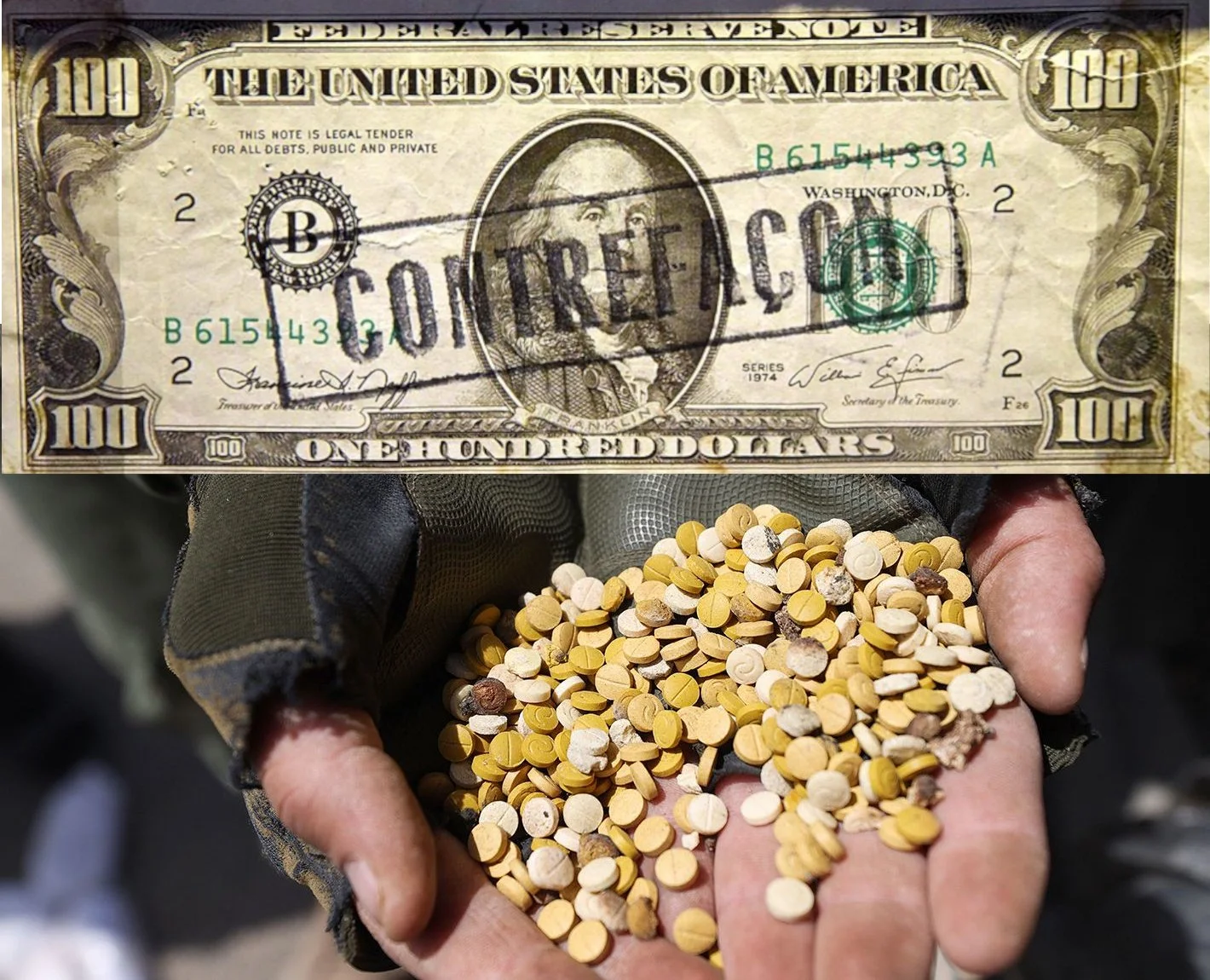
Counterfeit 100 dollar “SuperNote”, Captagon drug pills
See full article here: Press this link!
Abstract -
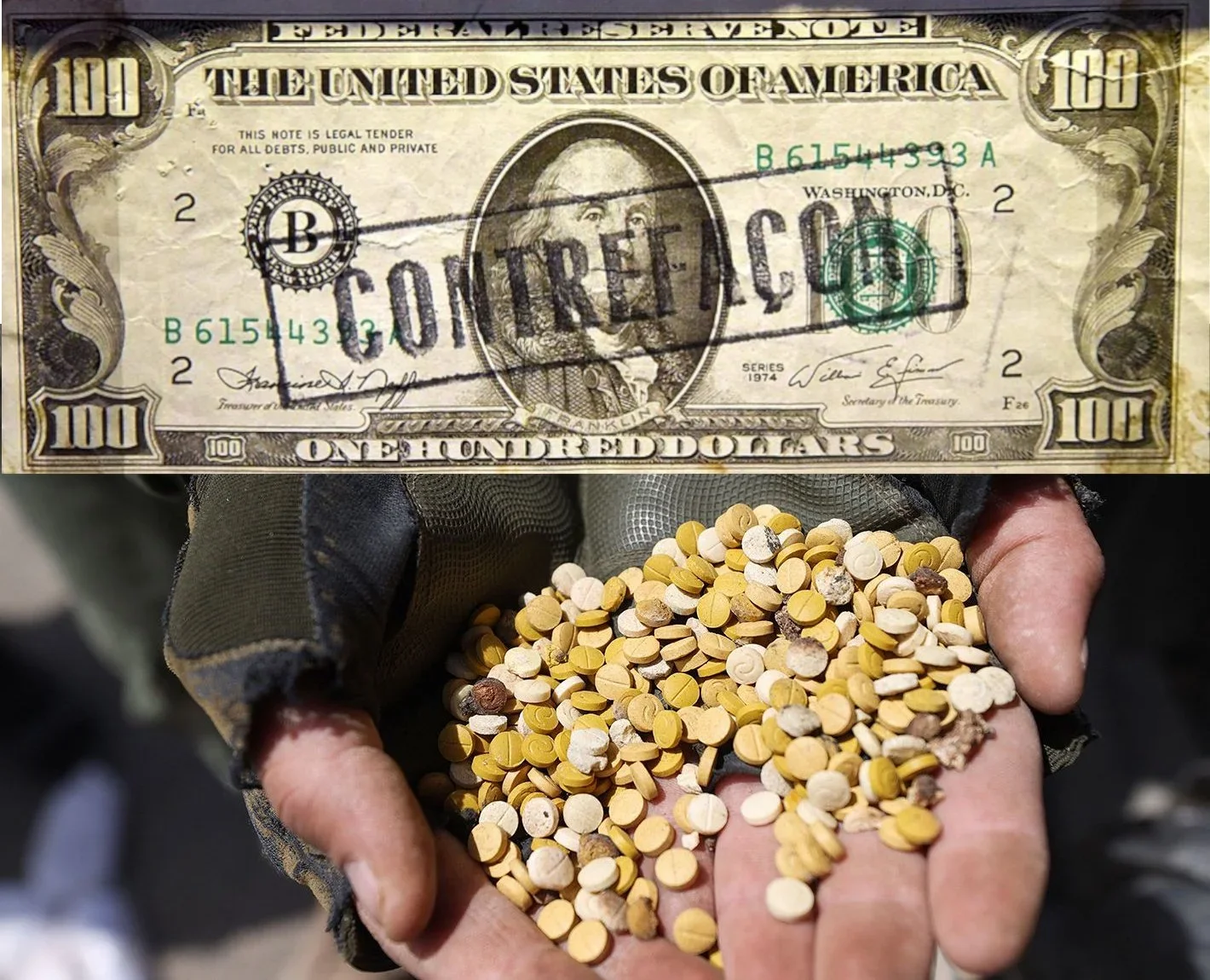
Hezbollah, founded with the intention of destroying Israel, has long engaged in illicit efforts to amass resources the size of some states’ coffers. The Lebanese group's long-running global criminal syndicate with the Assad regime, initially forged in the 1980s, more recently allowed it to fight for more than a decade in the Syrian conflict and to launch attacks on Israel for more than a year during the Gaza war. This article traces the roots of Hezbollah's illicit financial operations, focusing on its collaboration with high-ranking Syrian officers and officials during their country's intervention in Lebanon. It leverages declassified IDF and CIA intelligence reports, Israeli and US government documents, and media reports in Arabic and Hebrew to reveal how the Hezbollah-Syrian partnership engaged in global drug trafficking, currency counterfeiting, and money laundering, then repatriated the earnings. The analysis then suggests how countermeasures used in the past could be repurposed to combat Hezbollah's financing for terrorism and military buildup, and it proposes some new methods, as well.
My first podcast! Iran's Role in the Middle East in Context, with ReConsider Political Podcast
My first podcast! The guys at ReConsider Political Podcast asked me to talk about Iran, Hizballah, Suleimani and Lebanon, and we spent an hour making this podcast. I hope you enjoy it.
My first podcast! The guys at ReConsider Political Podcast asked me to talk about Iran, Hizballah, Suleimani and Lebanon, and we spent an hour making this podcast. You can click the play button at the bottom of this page, or go on their website to hear more politics related podcasts by clicking the image. I hope you enjoy it!

ReConsider, by Xander and Erik, is a twice per month podcast in which we take on, in-depth, one pressing political issue facing western Democracies with a fresh, researched, and challenging perspective. We help listeners see the full context behind the issue and make up their own minds.
Iran's Role in the Middle East in Context, with Iftah Burman
Iftah Burman, founder of the Middle East Learning Academy, joins us to go over Iran’s broader role in the Middle East, particularly its operations outside of its own borders: what are its goals, what is the impact, and is Iran succeeding?
Iftah is a Middle East scholar that regularly briefs diplomats, foreign officials, academics, and different levels of young professionals. He also acts as the director of foreign senior-level mission to Israel of US government officials, US military officers, and different think-tank researchers. He’s also deeply involved with education, and regularly gives lectures to students and tour groups seeking broader context and understanding of the complexities in the region. He’s currently working on his PhD, with a dissertation focused on Hezbollah and Syria, but also studies and briefs experts on the Arab-Israeli conflict and Iranian-Western relations. Clearly, a relevant topic right now.

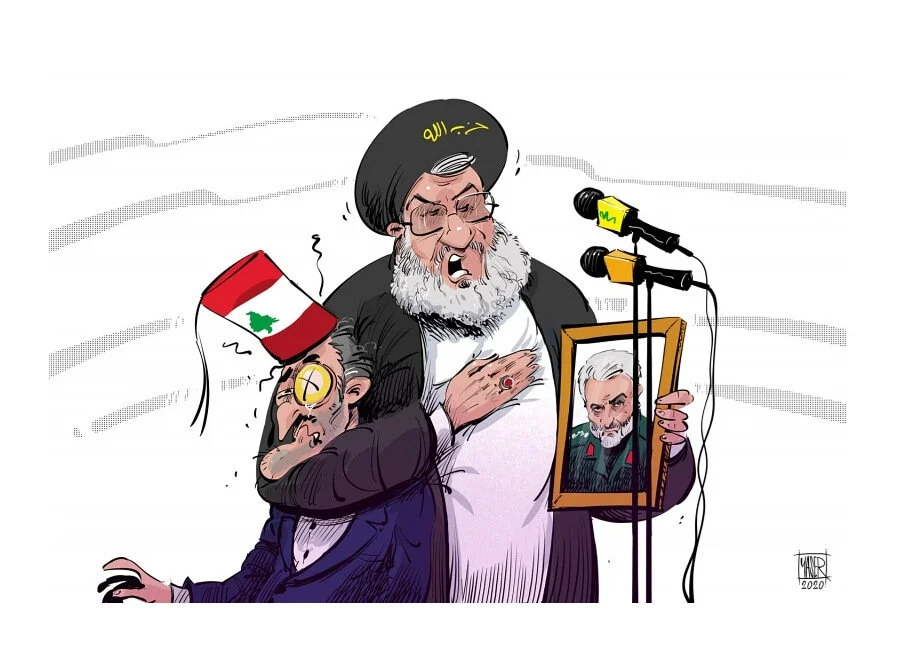
Nasrallah choking Lebanon, praising Suleimani
The Israeli Regulation Law, Why Is It Different Than What You've Read, And What Is The Bigger Question Here
The Israeli Regulation Law, a law to appropriates land owned by Palestinians for usage of Israeli west bank settlements, was given many different interpretations, which in turn encouraged a lot of misconception. How is this bill different than what you've read, and what future circumstances can it lead to?
The Israeli Regulation Law, a law to appropriate land owned by Palestinians for usage of Israeli west bank settlements, was given many different interpretations, which in turn encouraged a lot of misconceptions. How is this bill different than what you've read, and what future circumstances can it lead to?
Well for one, this law refers exclusively to construction that was started before the passing of the bill, and says nothing of future construction. Another thing is that it refers to structures built in "good faith" or endorsed somehow by the state. A potential issue the Israeli government might encounter is how do you establish "good faith", meaning how to separate "land bandits" from the "misinformed". Another part of the law says that the land would be appropriated only if what was already built is considerably of more value than the land itself, referring to it as a judgement of proportionality between destroying and preserving.
This type of law exists in many democracies such as USA, Canada, France, and UK, called "Eminent Domain", which grants the state the right to appropriate (the name US lawmakers gave it) private property for other usage, with proper compensation.

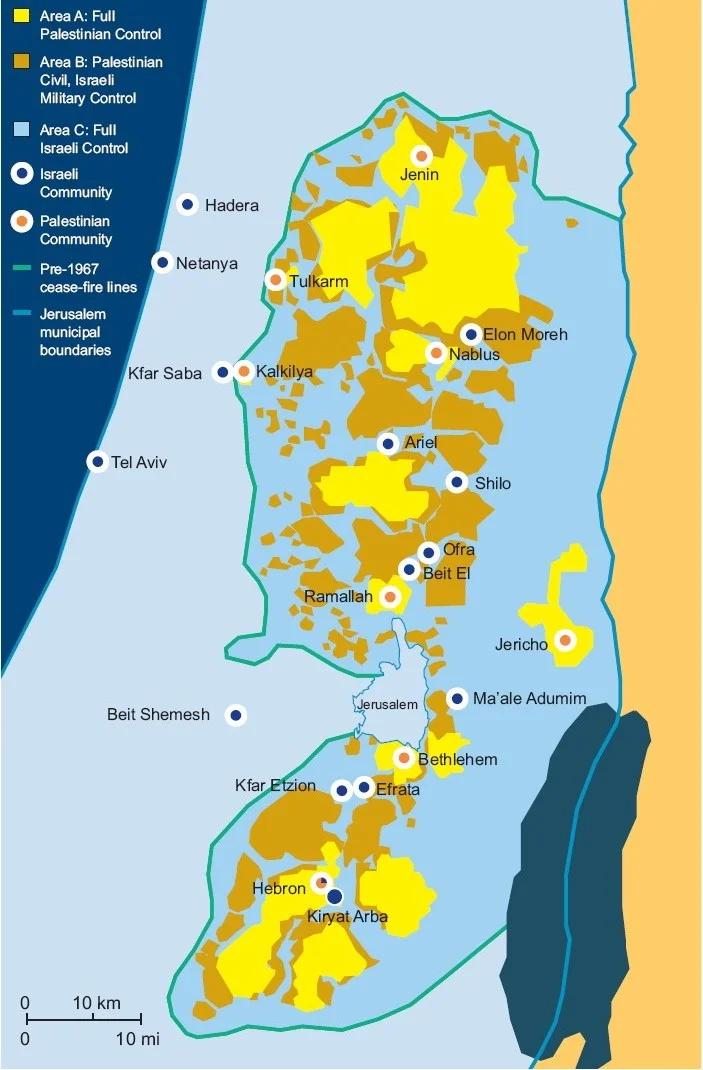
A+B (yellow and brown)=40% C (blue inside the line) 400K settlers + 90K Palestinians.
A key part of the Israeli Regulation law is that it does not make the state the owner of the land, but rather grants it usage and possession rights, leaving the original owner his land, with compensation of 125% of the value of usage, or a choice of another plot. Another significant part is that the law stipulates that it would cease to apply if there is a change of a national nature to the land that would contradict it, meaning if either side, Palestinian or Israeli, annexes the territory.
The main question here in my opinion, which the Israeli supreme court would have to answer, is whether or not the Israeli law can be applied to Judea and Samaria (the West Bank), as it was never annexed by Israel. Another part of the same question would be whether or not this Israeli law can be applied on Palestinians, owners of said land, despite the fact that they are not Israeli citizens. A yes on both accounts would mean much greater repercussion.
Many assume that this law would be thrown out by the Israeli supreme court. But on the event the court says the law is legal on both accounts mentioned above, this would then potentially entail further advancement in granting Palestinians a legal standing at the Israeli judiciary system, and the ability to sue the state for their civil rights, according to Israeli law. A potential way for the Israeli government then to thwart that would be to annex area C only, 60% of the west bank, and to apply Israeli law only on its residence, the settler community, about 400K Israeli Jews, and over 90K Palestinians.
In conclusion, the main question this bill raises is not what would happen to the Palestinian land on which 2000 houses were built or to the houses themselves, but rather something much greater than that, much more "big picture". The question here is whether or not Israel is applying Israeli law on area C, on its way to annexing it, much like Minister Bennett has been pushing for, unilaterally establishing the borders of the Palestinian state, and its own.
The Israeli-Palestinian impasse could be at a dangerous tipping point
On the recent deadly Palestinian attacks in Israel. What brought us here, possible outs and possible complications. Hebrew version follows the english one. First published on the Business Insider, October 14th, 2015.
(גירסה עברית של מאמר זה, בהמשך הדף)
Recent terrorist acts in Israel raise the question of whether the region is facing yet another wave of Palestinian violence, or a full-blown third Intifada.
In the past few days scores of Palestinian stabbing, rock throwing, shooting and bombing attacks against the Jewish population have occurred in Jerusalem, the West Bank, and towns inside of Israel’s internationally recognized borders. Israeli and Palestinians security forces have been unable to thwart the attacks, which seem to be launched without much of a premeditated process or preparations.
The latest attacks contain elements of both the First Intifada of 1987, and the second one, which started in 2000. The first was a people’s uprising, with participants mostly between the ages of thirteen to twenty. It was characterized by stone throwing, firebombs, pipe bombs, and sporadic shooting. Terror organizations had little involvement and the uprising was disorganized in nature.
Those confrontations have similarities to the situation right now, with the added element of unpredictable rioting. Over the last month, Jerusalem police have arrested over 120 Palestinian teens involved in riot events, one of which led to the death of Alexander Levlovitz, an Israeli killed in a rock-throwing attack in Jerusalem on September 13th.
These events seem to occur randomly in both time and geography. But as in the Second Intifada that began 15 years ago, the attackers attribute religious reasoning to their actions. Some of the terrorists have posted Facebook statuses or talked with relatives about what they regarded as violations of the Al-Aqsa Mosque prior to carrying out their attacks. In contrast to past uprisings, Muslim religious reasoning surpasses Palestinian nationalism as a motive.

"Stab" campaign on Palestinian media.
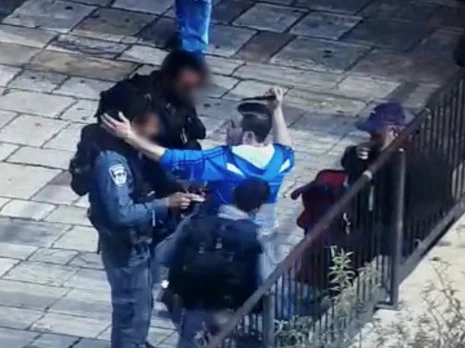
In a possible echo of the Arab uprisings of earlier this decade, the attackers are acting semi-spontaneously, using only whatever limited resources they have at their immediate disposal. Some of the Palestinian terrorists in recent weeks had no gun training as was evident from the actions of attackers like Amjad Aljundy, who stabbed two soldiers and took a rifle while neglecting to take its magazine, and Muhand Shafik, who stabbed four Jews in Jerusalem’s Old City, killing two of them but failing to use the gun he took. Videos on Arabic social media carry a message that there is no need for firearms when kitchen knives, backyard hatchets, or workplace screwdrivers can do the job.
This in turn lowers Israeli intelligence’s ability to thwart such attacks, as it minimizes the time span between thought of action and implementation.
The Israeli and Palestinian media are both serving as catalyzers of public sentiment. While Israeli media broadcasts fear and doubt, the Palestinian media conveys a message of anger along with calls to action.
Until recently, the Israeli media ignored most stone-throwing and firebomb attacks — and then started to cover every single event in depth as the pace of incidents accelerated. An integral part of the report is the commentators’ debate as to whether the country is in the midst of a passing wave of violence or a “third Intifada.” Frustrated news anchors ask questions of uncertainty, and officials interviewed, like Defense Minister Moshe Yaalon, call on civilians to carry arms for protection.
In contrast, the Palestinian media has already decided on a label for what’s happening right now, calling it the Jerusalem Intifada or the Third Intifada. Palestinian media has been posting videos and photos of injured or dead attackers, accompanied by hashtags such as #the_Third_Uprising" or #the_Uprising_Began.

A Palestinian Facebook user expresses her admiration for Fadi Arun, who was killed while attempting to carry out a knife attack.
A typical report on Faddy Alun’s death in Jerusalem neglected to mention he was wielding a knife when he was shot dead by police, right after he stabbed an orthodox teen. Instead, the incident was portrayed as an Israeli execution of a Palestinian who got into a fight with a few settlers.
Another report in the Palestinian media told of a six-year-old Palestinian child shot on a main road by a settler driving his car. The Palestinian media ignored follow-up reports which revealed the boy was actually shot while playing with his brother’s weapon and that his family fabricated the story in order to receive compensation money from the Palestinian Authority.
Palestinian and Israeli leaderships have taken very similar approaches, blaming each other in a political boxing match while trying to calm their angered publics. Palestinian Authority president Mahmoud Abbas, however, took the opening swing.
During his speech at the opening of the UN General Assembly on September 30, Abbas stated that the Palestinians are no longer committed to their various agreements with Israel, implicitly permitting the terror attacks that followed. He has also refused to condemn terrorist attacks as they happened.
Instead, the Palestinian Authority followed its own media’s lead and condemned Israel for "executing” the attackers, while piling on religion-related allegations about Israeli respect for the Al Aqsa status quo.
At the same time, Abbas instructed his police services to put down any demonstrations against his government and to help the Israel Defense Forces prevent terror attacks originating from the West Bank. Similarly ,Israeli prime minister Benjamin Netanyahu blamed the PA for deliberately causing the wave of terror through incitement — but called on Israeli Arab and Jewish leaders to prevent further escalation by refraining from going up to the Temple Mount, site of the Al-Aqsa Mosque.
Israeli Arab political and religious leadership as well as Israeli extreme right-wing leaders traded accusations of inflaming the situation by trying to change the status quo on the Temple Mount, and the Al-Aqsa mosque. The Israeli Arab leadership also accused Israeli police of gunning down Arabs they considered to be terrorists by mistake, and with using excessive lethal force on others.
Israeli and Palestinian security forces have gotten tougher and more violent with recent events. Recent videos show Palestinian police using batons to beat up young protesters, and Israeli police shooting a knife-wielding but stationary Arab woman. These incidents stress the point that both sides are resolute in preventing hostile factors from gaining more support.
But such policy could cause other, more moderate parts of the Palestinian and Israeli Arab society to be swept into the uprising. This worrying possibility has already started to take shape in various Arab cities in Israel, through the encouragement of The Islamic Movement, and in the Gaza strip, through incitement by Hamas, which like other Palestinian terrorist organizations has decided to stay out of the latest escalation for the time being.
Hamas recently suffered a blow to its rocket launching capabilities when Egypt flooded smuggling tunnels between the Strip and the Sinai peninsula. This also killed the flow of consumer goods into the Gaza Strip from Egypt, lowering Gazans quality of life dramatically.
Hamas fears the consequences of any violation of its Gaza wing’s non-written agreements with the IDF, which enabled Hamas to start reconstructing its infrastructure and the houses of disgruntled Gaza residents after last summer’s war with Israel. But the Islamist group also fears the consequences of sitting out the beginning of a popular uprising: On October 9, Hamas sent enraged supporters to storm Gazas border with Israel. At the same time, the militant group hasn’t launched any of its rocket arsenal towards Israel.
This doesn’t mean that Hamas has been entirely absent from the violence. An autonomous cell in the West Bank carried out an attack that killed two parents in front of their four children in early October. The cell was acting on a mandate to operate in an opportune moment.
The other armed factions likely will not operate as long as they are weak in the face of Israeli and Palestinian security cooperation. However, if they find an opportunity to present Abbas as an enemy of the Palestinian people, or if large-scale arrests of organization members are conducted, they may decide to join the fight.

An Israeli Facebook user responding to news of a police shooting of an alleged attacker in Afula, Israel. The Hebrew reads: "That's how you deal with terrorists".
On Facebook and Twitter, both societies seem uniform and polarized — with the significant exception of Israel’s Arab population.
Israeli Facebook posts express condemnation, rage, and calls for tougher responses, with some anti-Arab comments. Palestinian posts call for protection of the Al-Aqsa mosque and solidarity with the attackers. Blood-filled video clips decorate the virtual walls of both, with hateful messages for the other side justified by religious text quotes on occasion.
However, Israeli Arab voices are split. Some condemn the attacks and call to strive for peace with the Jews in Israel. Others reflect the same rage of their leaders, with similar religious fervor, and even call for more violence.
The combination of Palestinian and Israeli security forces, the security fence around the West Bank, the reduced ability of armed resistance factions and the lack of active participation from Israeli Arabs and Palestinian moderates can eventually deescalate matters.
But if the moderate publics reach a critical mass of intolerance, perhaps as a result of a Jewish terrorist attack or an Israeli army or police action, maters will change rapidly.
In such a scenario, Palestinian factions that have remained hesitant to join the uprising may decide to back the emerging Intifida, leading Israel to mobilize its security forces — crushing the PA’s understandings with Israel, along with the relative calm that has presided over the region for the past decade.
http://www.businessinsider.com/the-israeli-palestinian-impasse-could-be-at-a-dangerous-tipping-point-2015-10
טרור בישראל – אינתיפאדה שלישית או גל טרור חמישים ומשהו?
מעשי הטרור בישראל בעת האחרונה מעלים בקרב הפרשנים הישראלים והערבים, את השאלה האם אנחנו בעיצומה של אינתיפאדה, התקוממות עממית, או שמדובר בגל חולף של אלימות פלסטינית, גדול ואלים ככל שיהיה. ביממה האחרונה התרחשו למעלה מחמישה מקרי תקיפה של אוכלוסייה יהודית על ידי פלסטינים, רובם בירושלים, אך היו גם בקרית גת, בפתח תקווה, והאחרון התרחש בתל אביב. כוחות הביטחון הישראלים והפלסטינים הגיבו לאירועים אך נראה כי אין יכולת אמתית לעצור את המחבל הבא שנושא סכין או נוהג במכונית, מפני שעד אתמול בלילה, גם הוא לא ידע שהוא הולך להיות מחבל. חשיבות ההגדרה לתקופת מעשי הטרור היא כמובן לא מתוך התחשבות בעורך העיתון על מנת שיוכל לספק את הכותרת הנכונה, אלא על מנת להבין מניסיון העבר מה עלול לסמן העתיד, וכיצד יש לטפל באירועים על מנת להתמודד עם התופעה בצורה היעילה והמיטבית ביותר, ולמזער את הנזק לאוכלוסייה הישראלית והפלסטינית, תוך מניעת הסלמת המצב.
פיגועי העת האחרונה מכילים בתוכם אלמנטים גם מהאינתיפאדה הראשונה, שהחלה ב-1987, וגם מהשנייה, שתחילתה בשנת 2000. ההתקוממות העממית הפלסטינית הראשונה, הייתה כזו באמת, התקוממות מתוך העם, אשר הארגונים השונים תבעו עליה בעלות רק לאחר מעשה. היא אופיינה על ידי זריקות אבנים, בקבוקי תבערה ומטעני צינור מאולתרים, וירי מזדמן באירועים בודדים, ולא נשאה אופי מאורגן. רוב מעשי האלימות בוצעו על ידי נערים, בגילאי העשרה ותחילת ה-20. במידה רבה, אלו פני הדברים עכשיו. רוב מעשי הטרור, ודאי בירושלים בוצעו בעת האחרונה על ידי נוער, כאשר אנו מכלילים בנוסף לזריקת אבנים, בקבוקי התבערה והמטענים המאולתרים, גם אלמנט חדש שלא היה קיים ב-1987, זיקוקי דינור. משטרת ירושלים עצרה מאז ראש השנה מעל 120 נערים פלסטינים, במעורבות באירועים מסוג זה. בין אירועים אלה ניתן למנות גם אירוע קטלני, מותו של אלכסנדר לבלוביץ' כתוצאה מפיגוע זריקת אבנים בירושלים, בראש השנה. האירועים אינם מאורגנים ומתרחשים באופן אקראי, הן מבחינת הזמן והן מבחינת הגאוגרפיה. ארגונים שונים לוקחים אחריות לאחר מקרה, ולעתים נדמה כי הדבר נעשה כברירת מחדל על פי האספה האחרונה בה נכח המפגע, וכל קשר ממשי לארגון שנטל אחריות הוא מקרי. עם זאת ניתן לראות גם את הדמיון לאינתיפאדה השנייה, אינתיפאדת אל אקצא, לנוכח הזיקה הדתית שמיחסים המפגעים למעשיהם. רבים מהפיגועים בזירה הירושלמית בעת האחרונה הוצאו לפועל על ידי פלסטינים וערבים ישראלים ממזרח ירושלים אשר פרסמו סטטוסים בפייסבוק, או שוחחו עם קרוביהם על מה שהם הגדירו כפגיעה במסגד אל אקצא הקדוש. האלמנט הדתי, אשר הופיע במידה מסוימת גם באינתיפאדה השנייה, חוזר באירועי הטרור האחרונים, ואף גובר בנוכחותו בשיח הפייסבוק על האלמנט הלאומי פלסטיני.
ערוצי המדיה החברתית, פייסבוק וטוויטר, עוזרים להעריך את הלך הרוחות בקרב האוכלוסיות הישראלית והפלסטינית. שתי החברות נראות מאוד אחידות, וקוטביות אחת לשנייה, ללא הפתעה. בפייסבוק הישראלי ניתן לראות זעזוע, גינוי וקריאה לתגובה קשה כנגד המחבלים הפלסטינים. בדפי הפייסבוק הפלסטינים ישנה הזדהות עם המפגעים ועם מטרתם לשמור על קדושת מסגד אל אקצא, עד כדי הצגתם כקורבנות השלטון הישראלי בכלל, וכוחות הביטחון אשר הרגו אותם בפרט. הקירות הווירטואליים של שני הצדדים רווים בצילומי וידאו של האירועים השונים, פיגועי הטרור ופעולות הסיכול שלהם, כמו גם ההפגנות האלימות בגדה המערבית ופעולות צה"ל כנגדן. בתווך עומדים ערביי ישראל, אשר נראה כי חלקם נוטים לצד זה, וחלקם לצד השני. ההנהגה הפוליטית והדתית של ערבי ישראל, קרי חברי הכנסת הערבים ברשימה המאוחדת והנהגת התנועה האסלאמית, קוראים לעצור את הפגיעה במסגד הקדוש, ולעצור את הסלמת האירועים על ידי הימין הישראלי הקיצוני. אותם חברי הנהגה מגנים את מה שהם מכנים הוצאתם להורג של ערבים אשר נחשבו בטעות למפגעים, או שפעלו לפגוע אך השתמשו כנגדם בכוח קטלני מוגזם. החברה הישראלית הערבית מביעה רגשות מעורבים מעל קירות פייסבוק. מחד, ישנם דפים, כמו הדף ערבים וימנים מצייצים, אשר רוב תגובות החברים בו קוראות לגנות את הפיגועים של העת האחרונה, ולחתור לפתרונות שלום והבנה עם החברה היהודית בישראל. מנגד, ישנם פוסטים רבים של ערביי ישראל, בחשבונם האישי, או כתגובות בדפים שונים, המבטאים את אותו הקו של המנהיגים הפוליטיים והדתיים בחברה הערבית הישראלית, ואף מקצינים בכך שקוראים להרג נוסף של מתנחלים. אין אחידות בקול הערבי הישראלי במדיה החברתית, אך כן ניתן לזהות מגמה קיצונית יותר בקרב ההנהגה הערבית הדתית והפוליטית ובקרב ערביי ירושלים, המאשימים בראש ובראשונה את המתנחלים והנהגתם, ומובילים קמפיין אינטרנטי מסיט של טענות שקריות על הוצאה להורג של המפגעים ופגיעה במסגד אל-אקצא.
בהקשר הרחב ניתן לראות השפעה של אירועי המהפכות בעולם הערבי, ובפרט ביטויי האלימות הסכינאית והופעתם בערוצי המדיה החברתית באינטרנט, על החברה הפלסטינית. בסבב האלימות הקודם של מפגעים פלסטינים כנגד מטרות ישראליות בלט פיגוע סכיני הקצבים בבית הכנסת בהר נוף, נובמבר 2014. גם הסבב הנוכחי מראה כי הסכין הינו הנשק העממי, הזמין ביותר. המדיה החברתית הערבית באינטרנט מוצפת בסרטים של ארגונים וצבאות ערבים אשר הורגים את אויביהם או את שבוייהם באמצעות סכינים, כידוני נשק, גרזנים ושבריות. לרוב הפלסטינים אשר יצאו לבצע פיגוע בשבועות האחרונים לא הייתה הכשרה בכלי נשק חמים, ולראיה חוסר יכולתו של אמג'ד אלג'ונדי, המחבל שדקר חיילים באוטובוס בקריית גת, לזהות כי חטף נשק ללא מחסנית, וחוסר הצלחתו של מוהנד שפיק, המחבל שרצח שני יהודים עוברי אורח בעיר העתיקה ופצע שנים נוספים בדקירות סכין, לתפעל כראוי את הנשק שחטף מהרב נחמיה לביא, ולרצוח אנשים נוספים. סרטוני הווידאו אשר מובאים ברוב ערוצי החדשות האינטרנטיים הערביים, נותנים את התחושה למפגעים כי אין צורך בהכשרה בנשק חם, וכי כלי המטבח שברשותם, הגרזן שבחצר, או המברג בעבודה, יספיקו להם לבצע את זממם, דבר המקצר את משך הזמן בין החשיבה על הפעולה לבין ביצועה, ומוריד את היכולת המודיעינית לסכל אירועים שכאלה.
התקשורת הישראלית והפלסטינית שונות בהתייחסותן אל המאורעות, ואף באופן הגדרתם. העיתונות הישראלית הכתובה והמשודרת, החלה מסקרת בהרחבה כל אירוע במסגרת האירועים האחרונים, כל זריקת אבנים, כל בקבוק תבערה, כל התפרעות, וזאת לאחר התעלמות חלקית מאירועים אלו, עד לשבועות האחרונים. חלק בלתי נפרד מהשיח העיתונאי כיום הינו לתת כותרת אחת למהלך האירועים, או ליתר דיוק לתת מקום לדיון מה היא אותה כותרת. כלומר, האם מדובר בגל בודד של אירועי אלימות פלסטינית או שישראל כבר מצויה בעיצומה של אינתיפאדה שלישית, ויחד עם זאת הפרשנים באים ומרגיעים כי אין מדובר באינתיפאדה של ממש, אחרת הינו יודעים מכך. לעומתה, התקשורת הפלסטינית ברובה כבר קיבלה החלטה כי מדובר באינתיפאדה שלישית, וקוראת לה בשם אינתיפאדת ירושלים. בעבר, התייחסה התקשורת הפלסטינית לפרקי זמן שונים בהם התרחשו אירועי אלימות פלסטינית בשמות שונים כגון "התקוממות הדריסות", "התקוממות האבנים" וכו', אולם כעת סימני ההאשטג של האירועים האחרונים בדווחי החדשות הפלסטינים הינם "#ההתקוממות_השלישית" ו-"ההתקוממות_החלה".
עמדתה ותרומתה של התקשורת הפלסטינית להתגלגלות האירועים הומחש באופן הדיווח של מקרים שונים לאחרונה. מותו של פאדי עלון, תושב עיסאוויה, דווח בדפי החדשות הפלסטינים ככזה של נער בן 19 שנקלע לקטטה עם חבורת נוער מתנחל בירושלים, וכאשר עלון ברח לבקש עזרה משוטרים ישראלים הוא נורה על ידם למוות מטווח קצר. תיאור האירוע החסיר את תחילתו, כאשר תקף עלון נער חרדי בן 15 באמצעות סכין, ללא התגרות מציידו, והמשיך לאחר מכן לנופף בסכינו לעבר העוברים ושבים בצעקות בערבית. אירוע אחר שדווח בעמודי האינטרנט של העיתונות הפלסטינית סיפר על ילד פלסטיני בן 6 שפונה לבית החולים בקלקיליה לאחר שנורה בבטנו על ידי מתנחל אשר נסע ברכבו והבחין בילד מטייל לו לתומו לצד הכביש. לאחר כמה שעות התברר כי הילד נורה בסמיכות לביתו במהלך משחק בנשק של אחיו, חבר בכוחות הביטחון הפלסטיני, והמשפחה בדתה את הסיפור על מנת לא לסבך את האח, ולהרוויח בנוסף כספי פיצויים מהרשות הפלסטינית. התקשורת הפלסטינית התעלמה מהמשך הדיווח האמור, והסיפור נעלם לו בשטף הדיווחים האחרים, כמו גם מהעובדה כי ציבור המתנחלים הקיצוני, אשר רובו ככולו דתי, אינו נוהג להפר את איסור הנסיעה בשבת , היום בו חל האירוע המדובר. דיווחים אלה גרמו לתסיסה בקרב ציבור הקוראים הפלסטיני, ובקרב ערביי ישראל, ובמהלך השעות שלאחר הדיווחים התגברה האלימות וההפגנות ברחבי ירושלים והגדה המערבית.
חלקה של ההנהגה הינו קריטי בהתפתחות האירועים, גם הישראלית וגם הפלסטינית. בשלבים הראשונים של סבב הטרור הנוכחי נשא אבו מאזן נאום באו"ם אשר קבע כי הפלסטינים אינם מחויבים יותר להסכמים עם ישראל, ובכך התיר במרומז פעולות איבה כנגד מטרות ישראליות. מנגד, על פי דיווחי אמ"ן, אבו מאזן הנחה את מנגנוני הביטחון שלו לדכא גורמים מתסיסים בחברה הפלסטינית, ובמיוחד מקרב הארגונים המתנגדים לשלטונו, קרי חמאס והג'יהאד האסלאמי. בד בבד לא יצא גינוי פלסטיני רשמי לאירועי הטרור, אף לא לזה של חוליית החמאס שרצחה זוג הורים מההתנחלות נריה אל מול ארבעת ילדיהם. במקום זאת יצאה הרשות בגינויים כנגד ישראל אשר אשמה, לשיטתה, במותם של מפגעים כגון פאדי עלון, וקראה לקהילה הבינלאומית למנוע את האלימות הישראלית, כלשונם. גינויים אלה מישרים קו עם דיווחי התקשורת הפלסטינית, ובאים להראות הזדהות עם הנרטיב המופץ בקרב האוכלוסייה הפלסטינית, אשר נסוב בעיקר סביב טענות לניסיון לשינוי הסטטוס קוו במסגד אל אקצא. ההנהגה הישראלית קראה להרגיע את הלהבות, יחד עם מיצוי התהליכים עם המפגעים. ראש ממשלת ישראל, בנימין נתניהו, קרא למנהיגים בחברה הישראלית, היהודיים והערביים, להימנע מלעלות להר הבית, ובכך למנוע הלהטה של היצרים. עם זאת, ההנהגה הישראלית האשימה את זאת הפלסטינית בגרימת גל הפיגועים על ידי דברי ההסתה של חבריה. פרט לכך, בכירים שונים, כמו ראש העיר ירושלים, ניר ברקת, ושר הביטחון משה יעלון, קראו לאזרחים ישראלים לשאת את נשקם האישי עליהם, במטרה לעזור למנוע את הפיגוע הבא, ולתת מענה למפגע הבודד, שאין לדעת מתי ואיפה יפגע.
אירועי האלימות של העת האחרונה שינו את גם את התייחסותם של כוחות השיטור והביטחון, הן הישראלי והן הפלסטיני, אשר הפך קשה ואלים שאינו נוקט משנה זהירות. דרך המדיה החברתית ניתן לראות סרטונים ותמונות שונות בהן נראים כוחות השיטור מבצעים מעצרים אלימים, תוך הכאת החשודים בצורה קשה. סרטון שהועלה לעמוד חדשות פלסטיני בפייסבוק, הראה שוטרים פלסטינים מרביצים במקלות לצעיר פלסטיני אשר נעצר במהלך הפגנה נגד הרשות, ועוררו זעם בקרב האוכלוסייה הפלסטינית. סרטון אחר מראה ירי של כוחות ישראלים במחבלת חמושה בסכין מטווח קרוב, בעוד היא עומדת ללא תזוזה. כוחות הביטחון הישראלים, והביטחון המסכל הפלסטיני נראים מאוחדים במטרתם, למנוע מצעירי ההתקוממות המתהווה לסחוף עימם עוד מקרב הפלסטינים וערביי ירושלים, על ידי הרתעה ושימוש ביד קשה. עם זאת, קיים חשש כי מדיניות כזו עלולה לפגוע גם בחפים מפשע באוכלוסייה הבלתי מעורבת, ויתר מכך, להתקוממות של גורמים מתונים בחברה הערבית הישראלית ובחברה הפלסטינית.
השלב הבא בהתפתחות האירועים האחרונים, יכריע את הכיוון אליו ילך הגל הנוכחי, אם להחמרה או להקלה, אם לאינתיפאדה או לירידת הגל ולרגיעה. בשלב זה נמנע חמאס מגיבוי ארטילרי לאירועי האלימות הפלסטינית, ומסתפק בהצהרות תמיכה ושליחת תומכיו ברצועה להפגין מול הגדר עם ישראל. חמאס אינו רואה תועלת כרגע בהפרת ההסכמים הבלתי כתובים שלו עם צה"ל, אשר הביאו לתחילת שיקום רצועת עזה מהמערכה של קיץ 2014, ולשיכוך הכעס העזתי על הארגון. חמאס ספג לאחרונה מכה קשה ממצריים אשר הציפה את מנהרות ההברחה מסיני, שיותר משפגעה ביכולת הרקטית של הארגון, הפסיקה את זרימת הסחורות את תוך הרצועה, ועל ידי כך פגעה בהכנסתם של רבבות פלסטינים, ואיכות החיים של כל תושבי הרצועה. כל עוד חמאס, וכן שאר הארגונים כמו הג'יהאד האסלאמי, החזית העממית לשחרור פלסטין, וגדודי חללי אל אקצא, אינם מתערבים באופן ישיר בהתנהלות האירועים, ניתן להניח כי לא תיראה הסלמה של האלימות כלפי ישראל. אמנם הפיגוע כנגד משפחת הנקין בוצע על ידי חוליית חמאס, אך כפי הנראה לא הייתה הוראה ישירה של הנהגת חמאס להוציא את הפיגוע לפועל באותו הזמן, אלא הייתה זאת התארגנות של תא מקומי, אשר קיבל מימון, נשק והנחיה כללית לזהות שעת כושר. עם זאת, במידה ותהיה לארגונים עילה לשינוי אסטרטגיה, כמו מעצרים נרחבים של חברי הארגונים על ידי ישראל או הרשות הפלסטינית, או שתסתמן לה הזדמנות להראות את אבו מאזן כאויב העם הפלסטיני, עלולים הם לעלות על עגלת ההתקוממות הפלסטינית, להבעיר בה את אש ההתנגדות.
ללא מעורבות ניכרת של הארגונים והציבור הערבי המתון, ובעזרתם של מנגנוני הביטחון המסכל הפלסטיני וגדר הביטחון הישראלית המונעים מעבר של אמצעי טרור מהגדה לישראל, יכולים זרועות הביטחון הישראלי להשתלט באופן יחסי על האירועים, ולהביא לבסוף לדעיכתם. אולם, אם יחליטו הארגונים, או הציבור המתון בקרב ערביי ישראל או הפלסטינים, להצטרף אל גל הטרור, או אם הרשות תשנה את גישתה, אז תפרוץ אינתיפאדה שלישית, אשר תביא לריסוק ההבנות בין ישראל לרשות, והרגיעה היחסית אשר נראו מאז מות יאסר ערפאת, ודעיכת האינתיפאדה השנייה.
Israeli Elections - Unkept Promises and the Lesser Evil
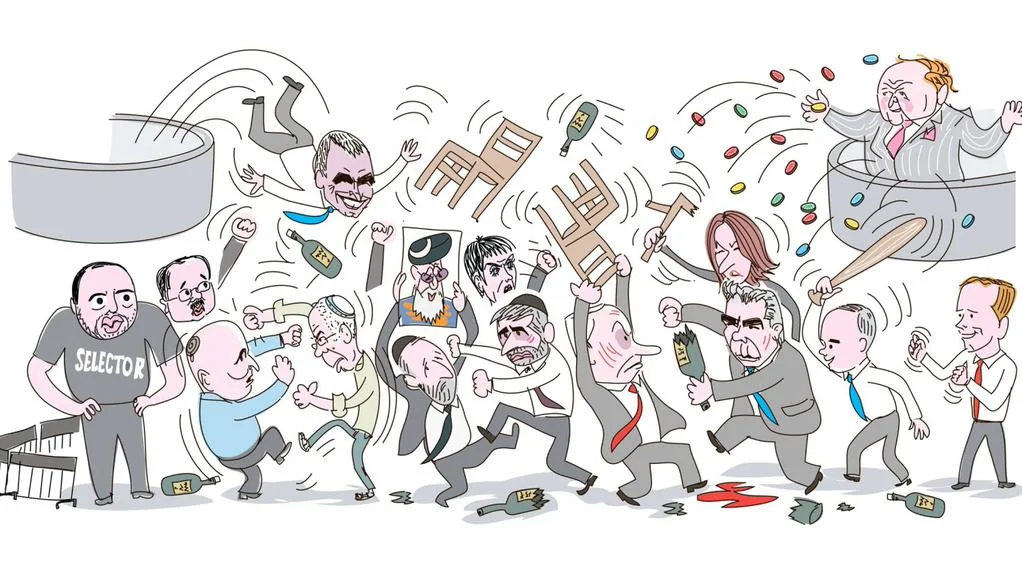
The Israeli elections, scheduled for tomorrow, are quite split, though not two ways, but rather five ways. A lot of the voters will only decide at the ballots, choosing the lesser evil. In very general negative lines, the reasons people give for not voting for the different parties are: Had enough of Bibi, Herzog is too soft, Tzipi is untrustworthy, Bennett is extreme, Kachlon is a bluf, Lapid is disappointing, Arabs are for the Palestinians, Hareidi's are only for themselves, Gal-on is irrelevant, and Lieberman is corrupt.
The Israeli elections, scheduled for tomorrow, are quite split, though not two ways, but rather five ways. A lot of the voters will only decide at the ballots, choosing the lesser evil. In very general negative lines, the reasons people give for not voting for the different parties are: Had enough of Bibi, Herzog is too soft, Tzipi is untrustworthy, Bennett is extreme, Kachlon is a bluf, Lapid is disappointing, Arabs are for the Palestinians, Hareidi's are only for themselves, Gal-on is irrelevant, and Lieberman is corrupt.
A lot of the right wing people don't want to vote for Bibi and the Likud, as they feel they had enough of him, personally. Some feel it's the time to go farther right, to Bennett and the Habait Hayehudi, on defense issues. Some feel that Kakhlon and Kulanu party could be the answer, so to push more social issues, but still vote right on defense. Lieberman's Israel Beitenu party has fallen apart due to corruption investigations, and subsequently lost most of it's voters, so much so that some suspect it will not make it over the necessary minimum.
As for the center, it is still Yair Lapid with Yesh Atid, but some of his disappointed right wing voters who felt he could make a difference on social issues, which was the ticket he ran on, found a place with Kakhlon. Some left wing voters were also disappointed and veered back to the left to Herzog and Tzipi at the Zionist camp.
Thus, a small Labor party, headed by Itzhak Herzog, became the number one contender for the prime-ministership as it joined the Tnua party, headed by Tzipy Livny, forming the Zionist Camp. The deal between the too was a rotation of two years each for the Prime Minister's office, respectively. Farther to the left, the Meretz party headed by Zehava Gal-On, is loosing traction too. Some of the people who voted for them, hoping for more compromise with the Palestinians and no settlement building, see that Herzog's party has Stav Shafir who is considered very left on those issues, and others like her, at a very hi place in the party. These voters are choosing to go with the bigger party, hoping to make a bigger difference.
What's left are the Arab and the Hareidi parties, which went through an opposite process to each other. The Arabs united, which gave them more power and more votes, and the Hareidi split, which weakened both sides, and split their public. Interestingly enough it seems that the Arab party will not seek to join the government coalition, to not confirm the Zionist rule over Israel. However, again on the opposite approach, the Hareidy need to join the government desperately, Zionist or not, to allow a better access to the budget plate.
Into this campaign pore a lot of foreign money, in the form of V15 who seek to replace Bibi, and Sheldon Adelson who wants to keep him in place. Also bring in two big newspapers that are butting heads without even attempting to wear a guise of objectivity: Yediot Ahronot, with it's Ynet website, for the Zionist camp, and Israel Today for the Likud.
And there you have it. The biggest party is the Zionist Camp, as the voters flocked to them, but the larger block is on the right, as the voters spread out from the Likud to other right wing parties. In Israel, it's the larger block, not the larger party, which would go on to compile the government.
There are two things to remember for this election. Quite like the last election, and possibly even more so, more Israelis are going to vote according to social issues: cheaper housing, lower cost of living and getting the big monopolies to give the middle class a break, like the gas and banks. The other thing is that Israelis are going to vote according to a party if they like who's heading it, and not vote for it if they distrust or even don't like the sound of their voice. In any case, It's not going to be as much on Iran, nor will it be as much about the Palestinians.
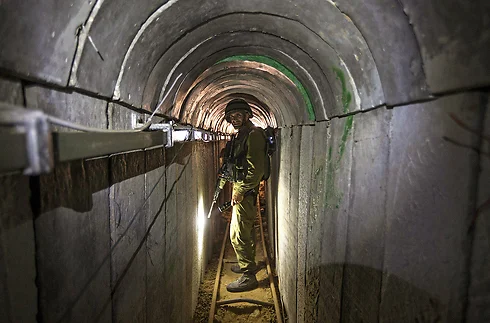
The book of war between Hamas and Israel, chapter 2014.
The last month of battles in Gaza and South Israel is only a link in a chain, years long. This ongoing situation is perpetuated through several factors, and accountability lies within the Palestinians, Israel, the Arab world and the international community. While Israel and Hamas are still at the negotiating table, and have declared that the fighting has not ended yet, lessons can be learned about the elements that brought them here, and where their paths are leading.
The book of war between Hamas and Israel, chapter 2014.
The last month of battles in Gaza and south Israel is only a link in a chain, years long. This latest skirmish, Protective Edge, has showed us that there is a struggle between a terrorist organization fighting for its political survival, Hamas, against a country that is committed to protecting its citizens, Israel. This ongoing situation is perpetuated through several factors, and accountability lies within the Palestinians, Israel, the Arab world and the international community. While both sides are still at the negotiating table, and have declared that the fighting has not ended yet, lessons can be learned about the elements that brought them here, and where their paths are leading.
The latest round of fighting between Hamas and Israel began when Hamas was at the end of its political rope. After many of its members were arrested in the west bank, following the kidnapping and killing of the three Jewish Israeli teens by a Hamas cell, Hamas started firing rockets from Gaza onto Israeli cities. At the end of weeklong warnings by the Israeli government, when those were not adhered to, Israel launched a reactive strike on Hamas. Hamas utilized 32 attack tunnels to infiltrate Israeli communities, and fired more than 3500 rockets on Israel in various ranges of up to 100km, but because of the Iron Dome system, civilian casualties were kept to a minimum. Israel has hit about 4800 militant targets in Gaza. 64 IDF soldiers and 3 Israeli civilians were killed; about 1000 Gaza militants and about 750 civilians were killed on the Palestinian side, during the month of battles.
The Palestinian people of Gaza, for the most part, have refused to denounce Hamas for the death it has brought to their homes. Granted, that is probably the most difficult to change element, since Hamas uses inhuman tactics to enforce its power and force itself on the powerless people of Gaza. For example, a few days ago I was informed by a Palestinian acquaintance that Hamas is harassing and has executed several Fatah affiliated Gazans, as a retaliation for the lack of political achievement in the latest campaign.
Another factor is the toleration of Hamas and its affiliates and their actions by the international community, primarily the EU and the UN. While the trigger finger on boycotting Israel has been very light, the international community has not taken serious steps against Hamas. Such actions on their behalf would potentially help end the killing of Palestinian civilians serving as human shields for Hamas when it fires its rockets and digs its attack tunnels from their homes, schools, masques and sanctuaries. Despite the fact that they performed a violent military coup against the PLO in Gaza in 2007, removing Hamas from power has no real international backing, mainly because Hamas won the elections a year before the coup, and formed a unity government with the Fatah as of late.
The Middle East is going through drastic changes and the dust has not settled yet on all of the shifts the different nations are going through. While in Egypt Hamas was declared illegal, in Lebanon and Syria it has made its peace with Hizballah and the Assad regime, and is now receiving aid from Qatar once again. If the Palestinians would choose a future without Hamas, as Egypt did, the Middle East would need to align with their wishes, and stop funneling money through the organization. Today, money that is devoted to building Palestinian cities and bettering Palestinian lives in Gaza is being taxed by Hamas to build its infrastructure and weapons. That in its self is a war-perpetuating agent.
Some experts claim that if Hamas gives up its militant ways and leaves the path of the "Armed Struggle" like Fatah announced in 1993, it would stand a better chance for political survival, and would benefit its people much more than it had until today. However that does not seem to be an option Hamas is willing to consider.
On the Israeli side of the matter there are a few factors that are inconducive to the resolve of the situation as well, though those relate to the Palestinian motivation for supporting Hamas, and therefor do not carry much weight on the actual militant conflict, as I've mentioned above. Israel has managed the crossing from and to Gaza through the Israeli borders, and has made it possible for medical, familial, business, and Political related passage. However, the process is difficult and lengthy due to security measures and is disrupted whenever there is strife with Hamas, and so it creates discontent and aggravation with the Gazans who are using it, or would like to. Furthermore, products that are imported into Gaza from Israel are priced according to the Israeli living standard, which is expensive for Gazans. As long as Egypt keeps the Rafah crossing closed to Gaza, Palestinians cannot enjoy the same quality of life they had before, when the crossing was open for Egyptian goods and human traffic. However, the Rafah crossing was controlled and taxed by Hamas, allowing it to pass arms both ways, and that is why the Egyptians closed it. Finally, the stranded peace process between Israel and the Palestinian Authority does effects Gazans as well. When they see the President of the PA, Mahmud Abbas, failing, and Ismail Haniya, Head of Gaza's Hamas government waving the resistance flag, Gazans opt for the uncorrupt, only other option in the Palestinian politics: Hamas.
Hamas rcoket launching pad next to hotels and civilian residence.
Monitoring the efforts made by Israel to avoid collateral damage, and to prevent civilian casualties when targeting the Militants in Gaza, one can conclude that in general the laws of war that apply here allow an army to return fire to the exact location from where it was fired upon. In most of the cases I've studies, the retaliation of the Israeli army was against specific leaders of the Terrorist organizations, at their command posts, homes, or vehicles, and against active militant posts such as launching pads, missile storage, and underground attack tunnels. That being said, it is quite difficult for any army to avoid mistakes completely, and that is probably the case in a number of incidents that resulted in the death of innocent civilians. In most cases I've followed, rocket fire and attack tunnels originated from populated areas within the Gaza strip to create a sympathetic image of Hamas with the international community, when the IDF struck back and innocent civilians were hit by the collateral damage.
Coming to the end of this round, despite its rigorous efforts, Hamas has not been able to secure a victory image, and has led its people into a disastrous situation. Now, through negotiation, Hamas needs to gain at least three achievements in order to survive: 1. Getting financial support, so it can pay its people's salaries, and for the rebuilding of its infrastructure. 2. Opening the Rafah crossing with Egypt, to appease the Gazans and make sure Hamas has a steady income and a free passage of its leadership. 3. Freeing of Palestinian prisoners from Israeli jails, to regain popular support in the West Bank, or some sort of a similar gesture. Hamas is always in competition with the Fatah, as much as the "Armed Struggle" ideology is competing with the political discourse one. These achievements can facilitate its resurrection in the Palestinian political arena, and possibly allow it to return to the Egyptian warm embrace. Meanwhile, Mahmud Abbas is asked to take charge over Hamas strongholds such as the Rafah crossing, and is possibly the Palestinian who gained the most from this situation.
Israel comes out with the upper hand after this campaign, but at a higher cost than the last two rounds, Cast Lead (2008-9) and Pillar of Defense (2012), with 67 killed and hundreds of casualties, and great financial loses. With the help of Egypt, Israel would like to keep Hamas's political achievements to a minimum, while managing to avoid recognizing it as a legitimate partner in negotiations, and has been successful at that thus far. However Israel would have to face the growing discontent within the Israeli people, residents of the war zone, that demand a life free of rockets and tunnels, while that war zone expands through this latest skirmish to Tel-Aviv, Jerusalem and even Haifa.
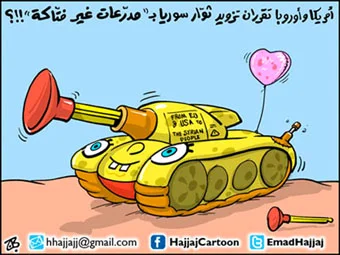
US wants to give the Syrian rebels Kevlar, they want C4
The US commits to soft aid for the Syrian rebels, but is this the full extent of military support it can give, or are there other maneuvers at play here?

"America & Europe to provide the Syrian rebels with non-lethal armor".
The Washington Post published an article last week on the promise of the Obama administration to supply the rebel forces in Syria with soft aid. Later, the Syrian opposition replied saying they need guns, not bandages. The unsuspecting reader would think that here is a conversation between the tactically cautious 1st world and the trigger-happy 3rd world, but far from it. Indeed, the American administration is being careful, with its declarations, with its diplomacy, with its commitments printed black on newspaper. And yes, the rebels are in need of whichever apparatus that would give them the upper hand in the fight. But this is not the first dance for these two partners, and though they have not put arms around each other, they have been going around in circles, around one another for a while now.
While no confirmation of a direct US intervention in the conflict in Syria, American boots, or more correctly slick black polished shoes, have hit the ground in Syria from day one. Several mentions of this have hit the world press in the past, though mostly referred to as advisors, and on occasion even as spies. Needless to say, no gun shipment of any sort, nor any training teams introduced to the arena by interested actors have gone in without the direct or indirect approval coming through the diplomatic back channels of the world’s leading hegemon and its allies. Guns, medicine, financial aid, military advisors, and political pressures on the surrounding countries, have been working their way in and around the rebels, as much as it had with the regime forces getting it from the opposing side. Just last week another article was published on how the Saudis are supplying the rebels with Croatian weapons. Turkey has been supplying the rebels, as well as supporting them, and having an open border policy with the Syrian refugees going out and Al Qaeda fighters going in. Kurdish-Iraq has been enabling the Kurdish resistance fighters in attacking the Assad regime forces from the north east. None of this could go on without the stamp of the bald eagle. So why come out with this declaration all of a sudden? Why does the world need to hear from Secretary Kerry that the US pledges 60mil $, and possibly defensive military paraphernalia, to the Syrian opposition? Is this just for the benefit of the other countries in the conference on Syria in Rome? And why only money and defensive measures?
The Syrian opposition needs serious weaponry. They need tanks, jet fighters, armor piercing shells, smart missiles, long-range cannons, and that’s just to thwart the Assad forces attacks. To take down Bashar Al-Assad himself they’ll need explosives, special ops equipment, surveillance equipment, a lot of training, and basically everything you saw on a “Mission Impossible” movie. The US administration cannot afford to give those to the rebels, or have them get it from any of its allies. The US knows that supplying the rebels with anything more than defensive equipment is to put dangerous weapons in the hands of Al-Qaeda organizations such as Jabhat Al-Nusra, aid that will come back to haunt exactly like it did with the Taliban in Afghanistan. The US knows that those weapons can get to the Kurdish resistance, which eventually, when it’s finished with the Syrian front, will turn to its Turkish front, and those weapons would be put to use against that NATO alliance partner. The US knows that if the Syrian opposition has so much military power, it might reconsider sitting down to the negotiation table, and decide to continue with targeting the rest of the Alawites in Syria, the governing echelon which comprise about 12 per cent of the Syrian population. Such ethnic cleansing will create an even bigger refugee crisis in the region than there already is, and would probably send the Druze and Shiite population in Syria running for the hills themselves. That’s why the US is going to send the Syrians Kevlar instead of C4.

"Eaurope permits non-lethal weapons for the Syrian rebels"
on the right, top to bottom: Russia, China, Iran, Hizballah, Syrian regime.
Taking down Assad could mean a complete and utter chaos. Doing so with the direct military assistance of the US would just facilitate that more quickly. One has just to look towards Iraq and Libya to realize that the Arab nations are better off sorting out their own mess. But that’s not to say that an indirect American involvement could not help prevent the tribal war that follows the fall of an Arab tyrant. The old Arab saying “Sixty years of tyranny are better than one night of Fitna (civil strife)” is why these regimes have held on for so long, and it is going to take gentle diplomacy to try and prevent the day from turning into that night, while not letting unwanted forces rise to the top.
The US declared involvement in Syria marks a new era in this conflict, but it is merely a precursor. The powers to be want to prevent any prolonging of the conflict, but also to avoid any genocide in the aftermath. The newly announced US commitment is not a declaration of war on the Syrian ruler. No, that already happened a long time ago, when the Obama administration made it very clear that Bashar Al-Assad is a persona non grata. But rather it is the start of bargaining with the Syrian opposition on the form and shape of Syria of the day after, and with the interested parties that are pushing for a more forceful approach, i.e. Qatar. My distinguished professor for American involvement in the Middle East use to say on every occasion “America’s business is business”. The US is looking for calm in the Middle East, and for preserving its economic interest in the region, and for that the Obama administration is willing to go through great lengths, and deliver large sums. To obtain those objectives the US is willing to publicly back the Syrian opposition and to rally the rest of the western world behind it, but only as long as the rebels, and their supporters in the gulf, adhere to the guidelines: An end to violence in Syria, live and let live. Violence is bad for business.
The US could promote the easiest way out for the Assad regime – a separate Alawite nation within Syria, much like the Kurdish one in Iraq. Negotiations have already started and the Syrian regime has already agreed to talk, as Syria’s foreign minister Walid Mualem stated in January. Sadly, for the opposition that would be considered as an egg not easily wiped off their faces. To allow Bashar Al-Assad to go scot-free, and to have him establish a new land in a prominent area of Syria – the coastal strip on the Mediterranean, is a notion the opposition cannot stand for and would never consider as a just resolve. On the other hand, the Syrian regime will not just step down, without ensuring the survival of its people and their prosperity. That’s why the US is promoting the idea that the opposition deserves justice, and is entitled to support. Not because the opposition needs a commitment of assistance, they are already getting it, and with the latest diplomatic caving of the regime to talk, the rebels are just a few yards away from achieving a touchdown. The money is an installment, an advance on a lifetime support and guaranty, and it is there so that the opposition would agree to such an ending, one that would allow the Alawites to continue their lives in Syria, which may seem as a defeat in the rebels’ eyes.
The US wants to deliver justice to the Syrian rebels. Justice in terms of aid, in terms of support, in terms of money. And justice needs to be seen, and so it did this weekend. Secretary Kerry was saying that the rebels will get 60mil $ in support, but what was to be read between the lines is that the US government is telling the opposition to take the deal they have been refusing, and that the west will pay for their swallowed pride, and will be in their debt for a very long time in the future.
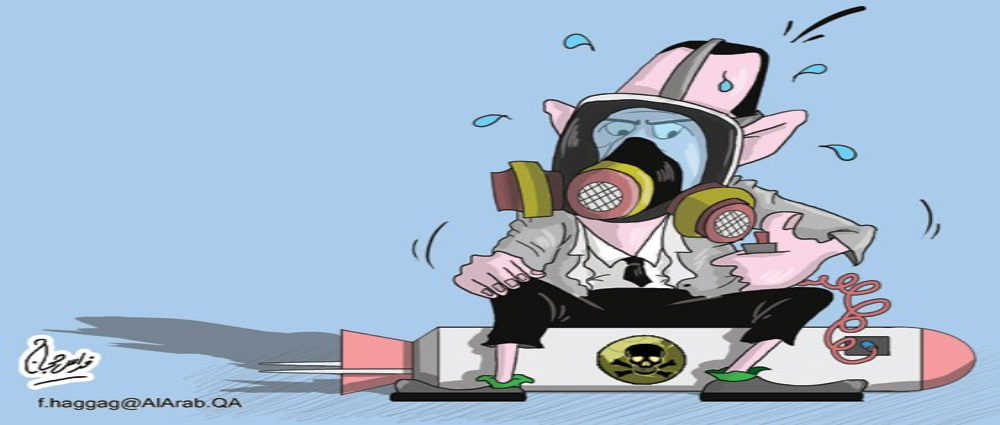
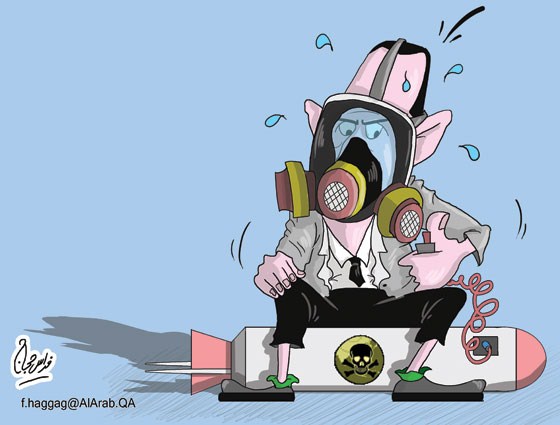
Syrian Chemical Weapons of Mass Confusion
Why we are so obsessed with the slight possibility of an indefinite movement in some obscure weapons storage facilities, but could not care less about the 300 Syrians that were killed today, and how it is firmly connected to the cross Islamic war that is afoot in the Middle East.
Over the course of the last few days several articles were published
on the Syrian chemical weapons, the initial two in the New
York Times[1],
and in The
Atlantic[2].
On the basis of intelligence information, these articles indicated that some
movement was detected recently in the chemical weapons facilities in Syria, and
that Israel asked twice for Jordanian consent to attacking those facilities
over the last month. It was also mentioned in the past by specialist that in
order for those weapons to be used, there are several steps that need to be
taken first, such as transferring the different agents, which are never stored
together, and mounting those on a weaponized carrier. Same experts stressed
that the Syrian chemical weapons cannot be deployed instantly, and such
movement would point to a potential motivation to deploy them.
The unstable situation of civil war in Syria makes these weapons of mass destruction a potential hazard to Syrians, but also to the surrounding nations as well. While the global community fears Assad's loyalist would use these against the Syrian people as means of last resort, a chemical expression of Assad’s ‘Let my soul die with the philistines’, there are also other concerns in the region. Turkey suspects that Assad would bomb areas close to its border, allowing for collateral damage to spill over and leaving Turkey to deal with the catastrophe. Israel fears that these weapons might be passed on by Assad to his allies, the Hizballah, equipping this extremist Shiite organization on its border with a tiebreaker weapon.
Further concern can be attributed to the fact that global jihadist, of the Al-Qaida variety, are a part of the opposition fighting Assad's troops. These kind of weapons falling into those kind of hands can find their way to be used in a variety of scenarios such as in Iraq against the Shiite population, in Egypt against the Mursi administration, in Saudi against American targets, or against any of the numerous enemies the Salafi oriented Jihadist groups have vowed to destroy.
To collaborate these suspicions, one has just to examine the aftermath of the Libyan "Arab Spring", and to follow the trail of the missiles, anti-aircraft/marine vessel guided weapons, and other munitions, that left storage rooms in Libya, and surfaced in Sinai desert, on trucks in Sudan, and in other parts of the Middle East. Such weapons were used against Mursi's army by Jihadist groups in the latest round a couple of months ago. These are the same type of weapons that were used against the IDF, the Israeli army, by Jihadist crossing over from Sinai into Israel. These are of the same Salafi oriented groups that were responsible for the death of the American Ambassador to Benghazi, and the Al-Qaida cells that are responsible for the incredible death toll in Iraq that reached 365[3] in last September as a result of the attacks on Shia civilian targets.
On the macro scale, the chemical weapons situation marks the concerns about post-Assad Syria. It is obvious to the different actors in the region that Assad’s days as the ruler of Syria are numbered, but it is quite in the mist what shape will the future Syria take. Currently, the struggle of the last relic of the Ba’ath socialist regime in the Middle East, for the most part has turned into a cross Islamic war between Sunnis and Alawite-represented-Shiites. In the mind of the Ayatollah regime in Iran, this is a battle for the geographical integrity of what the King of Jordan, King Abdallah, referred to as “The Shiite Crescent”, a connection between the Shiite communities in the different countries in the Middle East. This battle is already underway in Iraq, and does not seem to be coming to its final resolution in the near future.
Concerned parties are wondering whether driving Assad away, will actually bring a halt to aggression, or will it in fact turn Syria into an extension of the battle waging next door in Iraq. It is yet uncertain whether the Shiite hegemon of the region, Iran, will give up its ally along with a convenient land bridge to its proxy army, the Hizballah in Lebanon, or will it continue to send in the Revolutionary Guards in order to maintain some sort of a supply route across Syria. On the other hand, there are also concerns that the strife will continue to spill over to the other Shia-Sunni mixed countries in the region, as it has in Lebanon and Bahrain over the last few months. It seems that not only the Syrian people are fighting for their future, but also the Islamic Jihadist, and the Shiite Crescent.
[1] http://www.nytimes.com/2012/12/03/world/middleeast/syria-moves-its-chemical-weapons-and-gets-another-warning.html?_r=0
[2] http://www.theatlantic.com/international/archive/2012/12/israel-asked-jordan-for-approval-to-bomb-syrian-wmd-sites/265818/
[3] http://www.reuters.com/article/2012/10/27/us-iraq-violence-idUSBRE89Q05O20121027
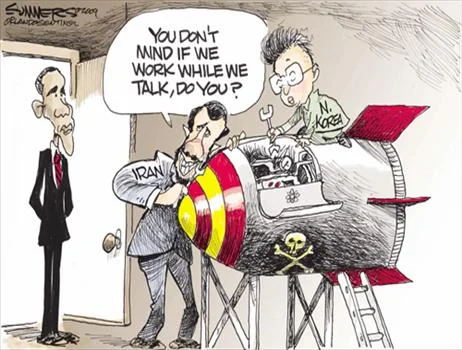
Difference of Perspectives
About the difference of perspectives between Israel and the US when facing the Iranian threat, and why Libya and Syria don't get the same deal.

------- A friend of mine wrote me a message asking about the relations between Israel and the USA in the context of the Middle East and the Iranian threat. It is followed by my response.
What's the comfort level in Israel with President Obama's so-called strategy vis a vis Iran? We don't know what to make of it over here. A few months back we were smacking the hell out of the Libyans for humanitarian reasons. Now we're posturing while Syrians are being massacred by their leaders. I think our message is "we'll take care of the little bullies, but when it comes to the big ones who push back you're on your own." Your thoughts?
------ My response
Well ****, President Obama is obviously doing what he believes is best for the United States of America. Having said that, albeit the long standing friendship between the two nations, what's best for the US is not always best for Israel. Obama says he's not practicing containment, but he is, though it is as much as every democrat administration in the US has done in the past, so little surprise there.
On the Israeli side of the map, things look very different from here. Here Israel is facing a autocratic regime with a record of 30 years of hostility, bluntly declaring it's desire to 'wipe the Zionists off the face of the earth'. This regime is currently lacking the ability to do so but is steadily working at it. Israel's experience with these type of threats thus far has been very positive: In 1981 a nuclear facility in Iraq was blasted from the air and in 2007 a Syrian similar facility was destroyed in the same manner. On both occasion Israel operated on its own, regardless of American objections, and succeeded in preserving a balance in the weapons race of the middle east, so claimed by foreign press.
Though the Iranian enterprise is much different from the ones mentioned above in its complexity and the right approach to destroying it, it still presents the same threat for Israel - annihilation. Therefor you can understand the reluctance of Israel to wait till the last second before attempting to resolve the issue. Notwithstanding the risk of opening a full scale war in the region, Israel prefers a preemptive strike on its own terms.
That being said, it is not necessarily the right course of action in order to rid Israel and the world of the Iranian threat. A skillful eye would notice that efforts to delay nuclear accomplishments in Iran are side by side with efforts to support a regime change in the country. The intent behind such maneuvers are not just to have Ahmadinejad step down, something that may happen in any case in the near future, but to facilitate any alternative, hopefully a sound and rational movement, to take the place of the Ayatollah regime. This perception allows for nuclear development but in the hands of a responsible government.
As far as the difference between Libya and Syria, the answer is simple and sad: oil, or the lack of for the latter. But this might not be a bad thing. Learning mistakes from past affairs - Iraq, Afghanistan - is crucial in the paradigm of western involvement in Arab/Muslim/Middle Eastern problems. In the Libyan case this was demonstrated in a sense: western involvement was kept to exterior parameters, and to preserving proper conduct of war. In a way it was basically leveling the playing field. This allowed for a leadership to rise from the ashes, and for some sort of accountability in post revolution times. The situation in Syria is much different.
Syria is marked by a non unified society that its only cohesive factor was the government. There is no real leadership to take the wheel against Assad, thus there is no one figure for the west to support. Whether such a leadership will develop, perhaps a coalescence of FSA and the SNC, time will tell. Until then the west' best move is to steer clear of direct involvement. Having said that, there is much to be done under the guise of humanitarian relief.
I think the main tones of my answer are these: The US has to understand that this region needs to consider its own interests first with local matters, especially when it comes to security, and that things which are apparent here, are not always obvious from over there.
Wells Blog
Duis mollis, est non commodo luctus, nisi erat porttitor ligula, eget lacinia odio sem nec elit. Maecenas faucibus mollis interdum. Nulla vitae elit libero, a pharetra augue.


Vivamus pellentesque vitae neque at vestibulum. Donec efficitur mollis dui vel pharetra.