
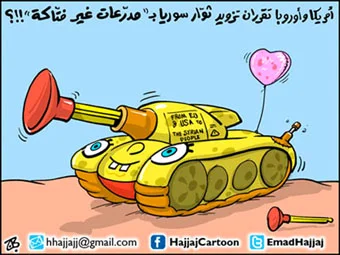
US wants to give the Syrian rebels Kevlar, they want C4
The US commits to soft aid for the Syrian rebels, but is this the full extent of military support it can give, or are there other maneuvers at play here?

"America & Europe to provide the Syrian rebels with non-lethal armor".
The Washington Post published an article last week on the promise of the Obama administration to supply the rebel forces in Syria with soft aid. Later, the Syrian opposition replied saying they need guns, not bandages. The unsuspecting reader would think that here is a conversation between the tactically cautious 1st world and the trigger-happy 3rd world, but far from it. Indeed, the American administration is being careful, with its declarations, with its diplomacy, with its commitments printed black on newspaper. And yes, the rebels are in need of whichever apparatus that would give them the upper hand in the fight. But this is not the first dance for these two partners, and though they have not put arms around each other, they have been going around in circles, around one another for a while now.
While no confirmation of a direct US intervention in the conflict in Syria, American boots, or more correctly slick black polished shoes, have hit the ground in Syria from day one. Several mentions of this have hit the world press in the past, though mostly referred to as advisors, and on occasion even as spies. Needless to say, no gun shipment of any sort, nor any training teams introduced to the arena by interested actors have gone in without the direct or indirect approval coming through the diplomatic back channels of the world’s leading hegemon and its allies. Guns, medicine, financial aid, military advisors, and political pressures on the surrounding countries, have been working their way in and around the rebels, as much as it had with the regime forces getting it from the opposing side. Just last week another article was published on how the Saudis are supplying the rebels with Croatian weapons. Turkey has been supplying the rebels, as well as supporting them, and having an open border policy with the Syrian refugees going out and Al Qaeda fighters going in. Kurdish-Iraq has been enabling the Kurdish resistance fighters in attacking the Assad regime forces from the north east. None of this could go on without the stamp of the bald eagle. So why come out with this declaration all of a sudden? Why does the world need to hear from Secretary Kerry that the US pledges 60mil $, and possibly defensive military paraphernalia, to the Syrian opposition? Is this just for the benefit of the other countries in the conference on Syria in Rome? And why only money and defensive measures?
The Syrian opposition needs serious weaponry. They need tanks, jet fighters, armor piercing shells, smart missiles, long-range cannons, and that’s just to thwart the Assad forces attacks. To take down Bashar Al-Assad himself they’ll need explosives, special ops equipment, surveillance equipment, a lot of training, and basically everything you saw on a “Mission Impossible” movie. The US administration cannot afford to give those to the rebels, or have them get it from any of its allies. The US knows that supplying the rebels with anything more than defensive equipment is to put dangerous weapons in the hands of Al-Qaeda organizations such as Jabhat Al-Nusra, aid that will come back to haunt exactly like it did with the Taliban in Afghanistan. The US knows that those weapons can get to the Kurdish resistance, which eventually, when it’s finished with the Syrian front, will turn to its Turkish front, and those weapons would be put to use against that NATO alliance partner. The US knows that if the Syrian opposition has so much military power, it might reconsider sitting down to the negotiation table, and decide to continue with targeting the rest of the Alawites in Syria, the governing echelon which comprise about 12 per cent of the Syrian population. Such ethnic cleansing will create an even bigger refugee crisis in the region than there already is, and would probably send the Druze and Shiite population in Syria running for the hills themselves. That’s why the US is going to send the Syrians Kevlar instead of C4.

"Eaurope permits non-lethal weapons for the Syrian rebels"
on the right, top to bottom: Russia, China, Iran, Hizballah, Syrian regime.
Taking down Assad could mean a complete and utter chaos. Doing so with the direct military assistance of the US would just facilitate that more quickly. One has just to look towards Iraq and Libya to realize that the Arab nations are better off sorting out their own mess. But that’s not to say that an indirect American involvement could not help prevent the tribal war that follows the fall of an Arab tyrant. The old Arab saying “Sixty years of tyranny are better than one night of Fitna (civil strife)” is why these regimes have held on for so long, and it is going to take gentle diplomacy to try and prevent the day from turning into that night, while not letting unwanted forces rise to the top.
The US declared involvement in Syria marks a new era in this conflict, but it is merely a precursor. The powers to be want to prevent any prolonging of the conflict, but also to avoid any genocide in the aftermath. The newly announced US commitment is not a declaration of war on the Syrian ruler. No, that already happened a long time ago, when the Obama administration made it very clear that Bashar Al-Assad is a persona non grata. But rather it is the start of bargaining with the Syrian opposition on the form and shape of Syria of the day after, and with the interested parties that are pushing for a more forceful approach, i.e. Qatar. My distinguished professor for American involvement in the Middle East use to say on every occasion “America’s business is business”. The US is looking for calm in the Middle East, and for preserving its economic interest in the region, and for that the Obama administration is willing to go through great lengths, and deliver large sums. To obtain those objectives the US is willing to publicly back the Syrian opposition and to rally the rest of the western world behind it, but only as long as the rebels, and their supporters in the gulf, adhere to the guidelines: An end to violence in Syria, live and let live. Violence is bad for business.
The US could promote the easiest way out for the Assad regime – a separate Alawite nation within Syria, much like the Kurdish one in Iraq. Negotiations have already started and the Syrian regime has already agreed to talk, as Syria’s foreign minister Walid Mualem stated in January. Sadly, for the opposition that would be considered as an egg not easily wiped off their faces. To allow Bashar Al-Assad to go scot-free, and to have him establish a new land in a prominent area of Syria – the coastal strip on the Mediterranean, is a notion the opposition cannot stand for and would never consider as a just resolve. On the other hand, the Syrian regime will not just step down, without ensuring the survival of its people and their prosperity. That’s why the US is promoting the idea that the opposition deserves justice, and is entitled to support. Not because the opposition needs a commitment of assistance, they are already getting it, and with the latest diplomatic caving of the regime to talk, the rebels are just a few yards away from achieving a touchdown. The money is an installment, an advance on a lifetime support and guaranty, and it is there so that the opposition would agree to such an ending, one that would allow the Alawites to continue their lives in Syria, which may seem as a defeat in the rebels’ eyes.
The US wants to deliver justice to the Syrian rebels. Justice in terms of aid, in terms of support, in terms of money. And justice needs to be seen, and so it did this weekend. Secretary Kerry was saying that the rebels will get 60mil $ in support, but what was to be read between the lines is that the US government is telling the opposition to take the deal they have been refusing, and that the west will pay for their swallowed pride, and will be in their debt for a very long time in the future.
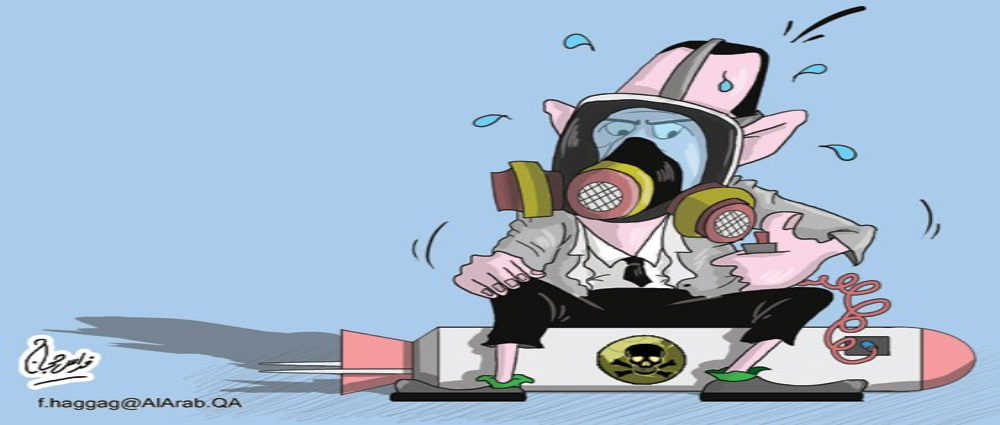
Syrian Chemical Weapons of Mass Confusion
Why we are so obsessed with the slight possibility of an indefinite movement in some obscure weapons storage facilities, but could not care less about the 300 Syrians that were killed today, and how it is firmly connected to the cross Islamic war that is afoot in the Middle East.
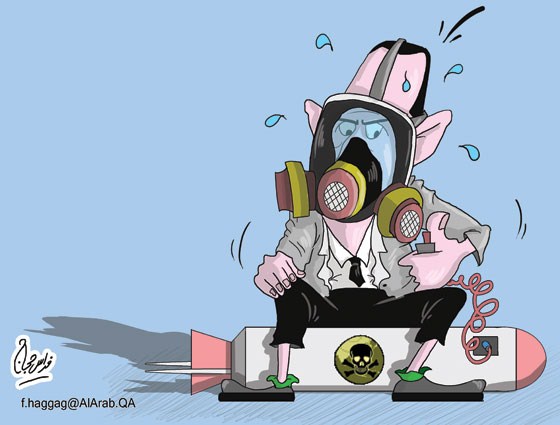
Over the course of the last few days several articles were published
on the Syrian chemical weapons, the initial two in the New
York Times[1],
and in The
Atlantic[2].
On the basis of intelligence information, these articles indicated that some
movement was detected recently in the chemical weapons facilities in Syria, and
that Israel asked twice for Jordanian consent to attacking those facilities
over the last month. It was also mentioned in the past by specialist that in
order for those weapons to be used, there are several steps that need to be
taken first, such as transferring the different agents, which are never stored
together, and mounting those on a weaponized carrier. Same experts stressed
that the Syrian chemical weapons cannot be deployed instantly, and such
movement would point to a potential motivation to deploy them.
The unstable situation of civil war in Syria makes these weapons of mass destruction a potential hazard to Syrians, but also to the surrounding nations as well. While the global community fears Assad's loyalist would use these against the Syrian people as means of last resort, a chemical expression of Assad’s ‘Let my soul die with the philistines’, there are also other concerns in the region. Turkey suspects that Assad would bomb areas close to its border, allowing for collateral damage to spill over and leaving Turkey to deal with the catastrophe. Israel fears that these weapons might be passed on by Assad to his allies, the Hizballah, equipping this extremist Shiite organization on its border with a tiebreaker weapon.
Further concern can be attributed to the fact that global jihadist, of the Al-Qaida variety, are a part of the opposition fighting Assad's troops. These kind of weapons falling into those kind of hands can find their way to be used in a variety of scenarios such as in Iraq against the Shiite population, in Egypt against the Mursi administration, in Saudi against American targets, or against any of the numerous enemies the Salafi oriented Jihadist groups have vowed to destroy.
To collaborate these suspicions, one has just to examine the aftermath of the Libyan "Arab Spring", and to follow the trail of the missiles, anti-aircraft/marine vessel guided weapons, and other munitions, that left storage rooms in Libya, and surfaced in Sinai desert, on trucks in Sudan, and in other parts of the Middle East. Such weapons were used against Mursi's army by Jihadist groups in the latest round a couple of months ago. These are the same type of weapons that were used against the IDF, the Israeli army, by Jihadist crossing over from Sinai into Israel. These are of the same Salafi oriented groups that were responsible for the death of the American Ambassador to Benghazi, and the Al-Qaida cells that are responsible for the incredible death toll in Iraq that reached 365[3] in last September as a result of the attacks on Shia civilian targets.
On the macro scale, the chemical weapons situation marks the concerns about post-Assad Syria. It is obvious to the different actors in the region that Assad’s days as the ruler of Syria are numbered, but it is quite in the mist what shape will the future Syria take. Currently, the struggle of the last relic of the Ba’ath socialist regime in the Middle East, for the most part has turned into a cross Islamic war between Sunnis and Alawite-represented-Shiites. In the mind of the Ayatollah regime in Iran, this is a battle for the geographical integrity of what the King of Jordan, King Abdallah, referred to as “The Shiite Crescent”, a connection between the Shiite communities in the different countries in the Middle East. This battle is already underway in Iraq, and does not seem to be coming to its final resolution in the near future.
Concerned parties are wondering whether driving Assad away, will actually bring a halt to aggression, or will it in fact turn Syria into an extension of the battle waging next door in Iraq. It is yet uncertain whether the Shiite hegemon of the region, Iran, will give up its ally along with a convenient land bridge to its proxy army, the Hizballah in Lebanon, or will it continue to send in the Revolutionary Guards in order to maintain some sort of a supply route across Syria. On the other hand, there are also concerns that the strife will continue to spill over to the other Shia-Sunni mixed countries in the region, as it has in Lebanon and Bahrain over the last few months. It seems that not only the Syrian people are fighting for their future, but also the Islamic Jihadist, and the Shiite Crescent.
[1] http://www.nytimes.com/2012/12/03/world/middleeast/syria-moves-its-chemical-weapons-and-gets-another-warning.html?_r=0
[2] http://www.theatlantic.com/international/archive/2012/12/israel-asked-jordan-for-approval-to-bomb-syrian-wmd-sites/265818/
[3] http://www.reuters.com/article/2012/10/27/us-iraq-violence-idUSBRE89Q05O20121027
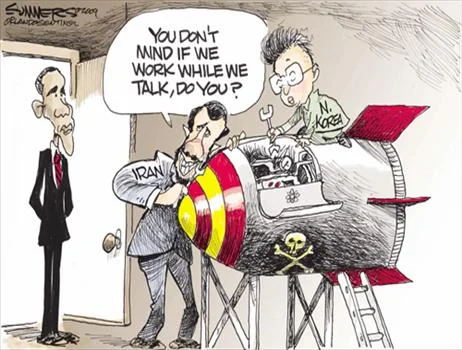
Difference of Perspectives
About the difference of perspectives between Israel and the US when facing the Iranian threat, and why Libya and Syria don't get the same deal.

------- A friend of mine wrote me a message asking about the relations between Israel and the USA in the context of the Middle East and the Iranian threat. It is followed by my response.
What's the comfort level in Israel with President Obama's so-called strategy vis a vis Iran? We don't know what to make of it over here. A few months back we were smacking the hell out of the Libyans for humanitarian reasons. Now we're posturing while Syrians are being massacred by their leaders. I think our message is "we'll take care of the little bullies, but when it comes to the big ones who push back you're on your own." Your thoughts?
------ My response
Well ****, President Obama is obviously doing what he believes is best for the United States of America. Having said that, albeit the long standing friendship between the two nations, what's best for the US is not always best for Israel. Obama says he's not practicing containment, but he is, though it is as much as every democrat administration in the US has done in the past, so little surprise there.
On the Israeli side of the map, things look very different from here. Here Israel is facing a autocratic regime with a record of 30 years of hostility, bluntly declaring it's desire to 'wipe the Zionists off the face of the earth'. This regime is currently lacking the ability to do so but is steadily working at it. Israel's experience with these type of threats thus far has been very positive: In 1981 a nuclear facility in Iraq was blasted from the air and in 2007 a Syrian similar facility was destroyed in the same manner. On both occasion Israel operated on its own, regardless of American objections, and succeeded in preserving a balance in the weapons race of the middle east, so claimed by foreign press.
Though the Iranian enterprise is much different from the ones mentioned above in its complexity and the right approach to destroying it, it still presents the same threat for Israel - annihilation. Therefor you can understand the reluctance of Israel to wait till the last second before attempting to resolve the issue. Notwithstanding the risk of opening a full scale war in the region, Israel prefers a preemptive strike on its own terms.
That being said, it is not necessarily the right course of action in order to rid Israel and the world of the Iranian threat. A skillful eye would notice that efforts to delay nuclear accomplishments in Iran are side by side with efforts to support a regime change in the country. The intent behind such maneuvers are not just to have Ahmadinejad step down, something that may happen in any case in the near future, but to facilitate any alternative, hopefully a sound and rational movement, to take the place of the Ayatollah regime. This perception allows for nuclear development but in the hands of a responsible government.
As far as the difference between Libya and Syria, the answer is simple and sad: oil, or the lack of for the latter. But this might not be a bad thing. Learning mistakes from past affairs - Iraq, Afghanistan - is crucial in the paradigm of western involvement in Arab/Muslim/Middle Eastern problems. In the Libyan case this was demonstrated in a sense: western involvement was kept to exterior parameters, and to preserving proper conduct of war. In a way it was basically leveling the playing field. This allowed for a leadership to rise from the ashes, and for some sort of accountability in post revolution times. The situation in Syria is much different.
Syria is marked by a non unified society that its only cohesive factor was the government. There is no real leadership to take the wheel against Assad, thus there is no one figure for the west to support. Whether such a leadership will develop, perhaps a coalescence of FSA and the SNC, time will tell. Until then the west' best move is to steer clear of direct involvement. Having said that, there is much to be done under the guise of humanitarian relief.
I think the main tones of my answer are these: The US has to understand that this region needs to consider its own interests first with local matters, especially when it comes to security, and that things which are apparent here, are not always obvious from over there.
Wells Blog
Duis mollis, est non commodo luctus, nisi erat porttitor ligula, eget lacinia odio sem nec elit. Maecenas faucibus mollis interdum. Nulla vitae elit libero, a pharetra augue.


Vivamus pellentesque vitae neque at vestibulum. Donec efficitur mollis dui vel pharetra.