
The Israeli Regulation Law, Why Is It Different Than What You've Read, And What Is The Bigger Question Here
The Israeli Regulation Law, a law to appropriates land owned by Palestinians for usage of Israeli west bank settlements, was given many different interpretations, which in turn encouraged a lot of misconception. How is this bill different than what you've read, and what future circumstances can it lead to?
The Israeli Regulation Law, a law to appropriate land owned by Palestinians for usage of Israeli west bank settlements, was given many different interpretations, which in turn encouraged a lot of misconceptions. How is this bill different than what you've read, and what future circumstances can it lead to?
Well for one, this law refers exclusively to construction that was started before the passing of the bill, and says nothing of future construction. Another thing is that it refers to structures built in "good faith" or endorsed somehow by the state. A potential issue the Israeli government might encounter is how do you establish "good faith", meaning how to separate "land bandits" from the "misinformed". Another part of the law says that the land would be appropriated only if what was already built is considerably of more value than the land itself, referring to it as a judgement of proportionality between destroying and preserving.
This type of law exists in many democracies such as USA, Canada, France, and UK, called "Eminent Domain", which grants the state the right to appropriate (the name US lawmakers gave it) private property for other usage, with proper compensation.

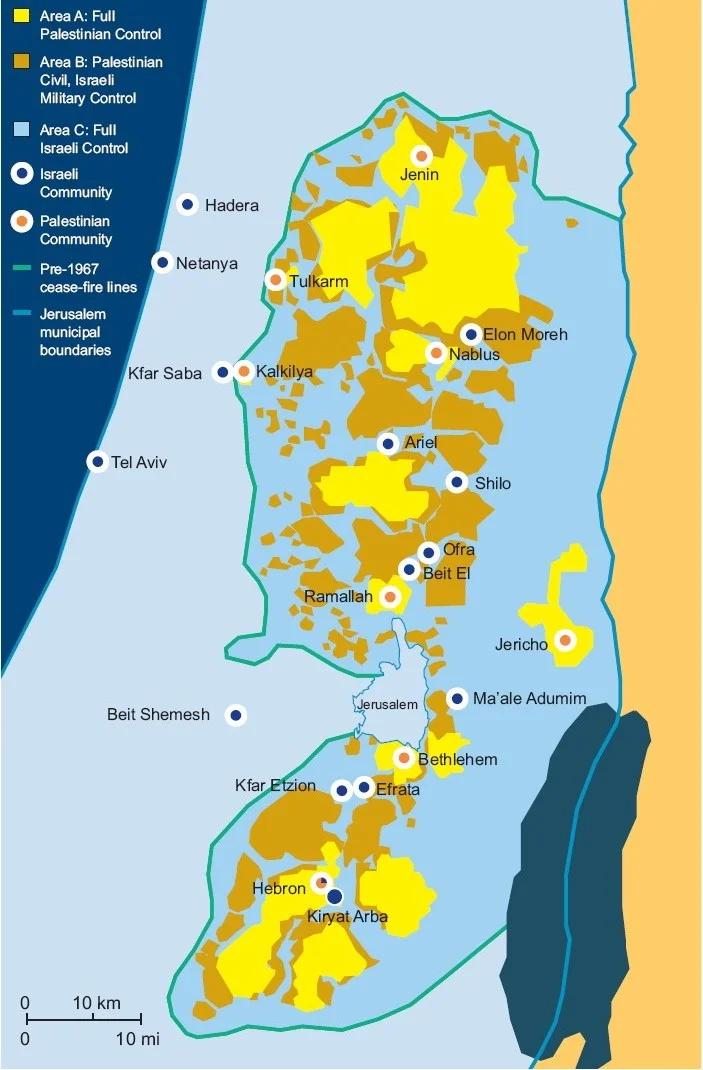
A+B (yellow and brown)=40% C (blue inside the line) 400K settlers + 90K Palestinians.
A key part of the Israeli Regulation law is that it does not make the state the owner of the land, but rather grants it usage and possession rights, leaving the original owner his land, with compensation of 125% of the value of usage, or a choice of another plot. Another significant part is that the law stipulates that it would cease to apply if there is a change of a national nature to the land that would contradict it, meaning if either side, Palestinian or Israeli, annexes the territory.
The main question here in my opinion, which the Israeli supreme court would have to answer, is whether or not the Israeli law can be applied to Judea and Samaria (the West Bank), as it was never annexed by Israel. Another part of the same question would be whether or not this Israeli law can be applied on Palestinians, owners of said land, despite the fact that they are not Israeli citizens. A yes on both accounts would mean much greater repercussion.
Many assume that this law would be thrown out by the Israeli supreme court. But on the event the court says the law is legal on both accounts mentioned above, this would then potentially entail further advancement in granting Palestinians a legal standing at the Israeli judiciary system, and the ability to sue the state for their civil rights, according to Israeli law. A potential way for the Israeli government then to thwart that would be to annex area C only, 60% of the west bank, and to apply Israeli law only on its residence, the settler community, about 400K Israeli Jews, and over 90K Palestinians.
In conclusion, the main question this bill raises is not what would happen to the Palestinian land on which 2000 houses were built or to the houses themselves, but rather something much greater than that, much more "big picture". The question here is whether or not Israel is applying Israeli law on area C, on its way to annexing it, much like Minister Bennett has been pushing for, unilaterally establishing the borders of the Palestinian state, and its own.
Israeli Elections - Unkept Promises and the Lesser Evil
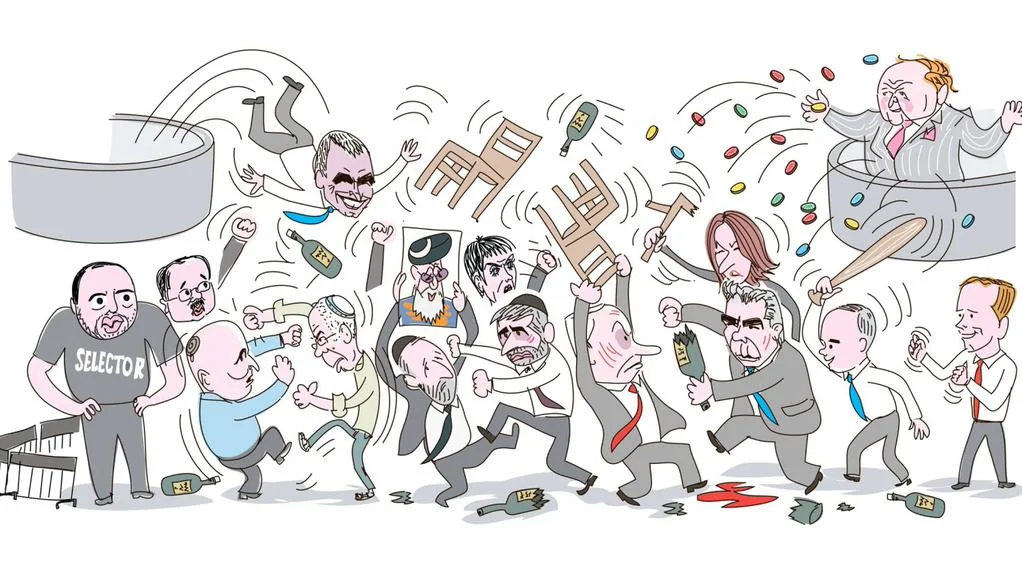
The Israeli elections, scheduled for tomorrow, are quite split, though not two ways, but rather five ways. A lot of the voters will only decide at the ballots, choosing the lesser evil. In very general negative lines, the reasons people give for not voting for the different parties are: Had enough of Bibi, Herzog is too soft, Tzipi is untrustworthy, Bennett is extreme, Kachlon is a bluf, Lapid is disappointing, Arabs are for the Palestinians, Hareidi's are only for themselves, Gal-on is irrelevant, and Lieberman is corrupt.
The Israeli elections, scheduled for tomorrow, are quite split, though not two ways, but rather five ways. A lot of the voters will only decide at the ballots, choosing the lesser evil. In very general negative lines, the reasons people give for not voting for the different parties are: Had enough of Bibi, Herzog is too soft, Tzipi is untrustworthy, Bennett is extreme, Kachlon is a bluf, Lapid is disappointing, Arabs are for the Palestinians, Hareidi's are only for themselves, Gal-on is irrelevant, and Lieberman is corrupt.
A lot of the right wing people don't want to vote for Bibi and the Likud, as they feel they had enough of him, personally. Some feel it's the time to go farther right, to Bennett and the Habait Hayehudi, on defense issues. Some feel that Kakhlon and Kulanu party could be the answer, so to push more social issues, but still vote right on defense. Lieberman's Israel Beitenu party has fallen apart due to corruption investigations, and subsequently lost most of it's voters, so much so that some suspect it will not make it over the necessary minimum.
As for the center, it is still Yair Lapid with Yesh Atid, but some of his disappointed right wing voters who felt he could make a difference on social issues, which was the ticket he ran on, found a place with Kakhlon. Some left wing voters were also disappointed and veered back to the left to Herzog and Tzipi at the Zionist camp.
Thus, a small Labor party, headed by Itzhak Herzog, became the number one contender for the prime-ministership as it joined the Tnua party, headed by Tzipy Livny, forming the Zionist Camp. The deal between the too was a rotation of two years each for the Prime Minister's office, respectively. Farther to the left, the Meretz party headed by Zehava Gal-On, is loosing traction too. Some of the people who voted for them, hoping for more compromise with the Palestinians and no settlement building, see that Herzog's party has Stav Shafir who is considered very left on those issues, and others like her, at a very hi place in the party. These voters are choosing to go with the bigger party, hoping to make a bigger difference.
What's left are the Arab and the Hareidi parties, which went through an opposite process to each other. The Arabs united, which gave them more power and more votes, and the Hareidi split, which weakened both sides, and split their public. Interestingly enough it seems that the Arab party will not seek to join the government coalition, to not confirm the Zionist rule over Israel. However, again on the opposite approach, the Hareidy need to join the government desperately, Zionist or not, to allow a better access to the budget plate.
Into this campaign pore a lot of foreign money, in the form of V15 who seek to replace Bibi, and Sheldon Adelson who wants to keep him in place. Also bring in two big newspapers that are butting heads without even attempting to wear a guise of objectivity: Yediot Ahronot, with it's Ynet website, for the Zionist camp, and Israel Today for the Likud.
And there you have it. The biggest party is the Zionist Camp, as the voters flocked to them, but the larger block is on the right, as the voters spread out from the Likud to other right wing parties. In Israel, it's the larger block, not the larger party, which would go on to compile the government.
There are two things to remember for this election. Quite like the last election, and possibly even more so, more Israelis are going to vote according to social issues: cheaper housing, lower cost of living and getting the big monopolies to give the middle class a break, like the gas and banks. The other thing is that Israelis are going to vote according to a party if they like who's heading it, and not vote for it if they distrust or even don't like the sound of their voice. In any case, It's not going to be as much on Iran, nor will it be as much about the Palestinians.
The book of war between Hamas and Israel, chapter 2014.
The last month of battles in Gaza and South Israel is only a link in a chain, years long. This ongoing situation is perpetuated through several factors, and accountability lies within the Palestinians, Israel, the Arab world and the international community. While Israel and Hamas are still at the negotiating table, and have declared that the fighting has not ended yet, lessons can be learned about the elements that brought them here, and where their paths are leading.
The book of war between Hamas and Israel, chapter 2014.
The last month of battles in Gaza and south Israel is only a link in a chain, years long. This latest skirmish, Protective Edge, has showed us that there is a struggle between a terrorist organization fighting for its political survival, Hamas, against a country that is committed to protecting its citizens, Israel. This ongoing situation is perpetuated through several factors, and accountability lies within the Palestinians, Israel, the Arab world and the international community. While both sides are still at the negotiating table, and have declared that the fighting has not ended yet, lessons can be learned about the elements that brought them here, and where their paths are leading.
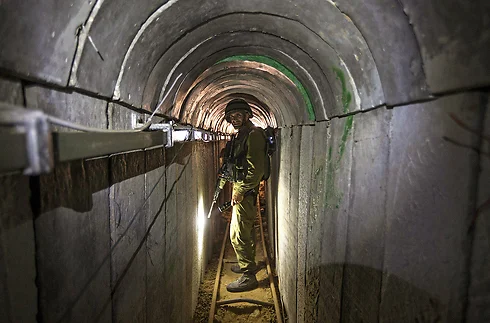
The latest round of fighting between Hamas and Israel began when Hamas was at the end of its political rope. After many of its members were arrested in the west bank, following the kidnapping and killing of the three Jewish Israeli teens by a Hamas cell, Hamas started firing rockets from Gaza onto Israeli cities. At the end of weeklong warnings by the Israeli government, when those were not adhered to, Israel launched a reactive strike on Hamas. Hamas utilized 32 attack tunnels to infiltrate Israeli communities, and fired more than 3500 rockets on Israel in various ranges of up to 100km, but because of the Iron Dome system, civilian casualties were kept to a minimum. Israel has hit about 4800 militant targets in Gaza. 64 IDF soldiers and 3 Israeli civilians were killed; about 1000 Gaza militants and about 750 civilians were killed on the Palestinian side, during the month of battles.
The Palestinian people of Gaza, for the most part, have refused to denounce Hamas for the death it has brought to their homes. Granted, that is probably the most difficult to change element, since Hamas uses inhuman tactics to enforce its power and force itself on the powerless people of Gaza. For example, a few days ago I was informed by a Palestinian acquaintance that Hamas is harassing and has executed several Fatah affiliated Gazans, as a retaliation for the lack of political achievement in the latest campaign.
Another factor is the toleration of Hamas and its affiliates and their actions by the international community, primarily the EU and the UN. While the trigger finger on boycotting Israel has been very light, the international community has not taken serious steps against Hamas. Such actions on their behalf would potentially help end the killing of Palestinian civilians serving as human shields for Hamas when it fires its rockets and digs its attack tunnels from their homes, schools, masques and sanctuaries. Despite the fact that they performed a violent military coup against the PLO in Gaza in 2007, removing Hamas from power has no real international backing, mainly because Hamas won the elections a year before the coup, and formed a unity government with the Fatah as of late.
The Middle East is going through drastic changes and the dust has not settled yet on all of the shifts the different nations are going through. While in Egypt Hamas was declared illegal, in Lebanon and Syria it has made its peace with Hizballah and the Assad regime, and is now receiving aid from Qatar once again. If the Palestinians would choose a future without Hamas, as Egypt did, the Middle East would need to align with their wishes, and stop funneling money through the organization. Today, money that is devoted to building Palestinian cities and bettering Palestinian lives in Gaza is being taxed by Hamas to build its infrastructure and weapons. That in its self is a war-perpetuating agent.
Some experts claim that if Hamas gives up its militant ways and leaves the path of the "Armed Struggle" like Fatah announced in 1993, it would stand a better chance for political survival, and would benefit its people much more than it had until today. However that does not seem to be an option Hamas is willing to consider.
On the Israeli side of the matter there are a few factors that are inconducive to the resolve of the situation as well, though those relate to the Palestinian motivation for supporting Hamas, and therefor do not carry much weight on the actual militant conflict, as I've mentioned above. Israel has managed the crossing from and to Gaza through the Israeli borders, and has made it possible for medical, familial, business, and Political related passage. However, the process is difficult and lengthy due to security measures and is disrupted whenever there is strife with Hamas, and so it creates discontent and aggravation with the Gazans who are using it, or would like to. Furthermore, products that are imported into Gaza from Israel are priced according to the Israeli living standard, which is expensive for Gazans. As long as Egypt keeps the Rafah crossing closed to Gaza, Palestinians cannot enjoy the same quality of life they had before, when the crossing was open for Egyptian goods and human traffic. However, the Rafah crossing was controlled and taxed by Hamas, allowing it to pass arms both ways, and that is why the Egyptians closed it. Finally, the stranded peace process between Israel and the Palestinian Authority does effects Gazans as well. When they see the President of the PA, Mahmud Abbas, failing, and Ismail Haniya, Head of Gaza's Hamas government waving the resistance flag, Gazans opt for the uncorrupt, only other option in the Palestinian politics: Hamas.
Hamas rcoket launching pad next to hotels and civilian residence.
Monitoring the efforts made by Israel to avoid collateral damage, and to prevent civilian casualties when targeting the Militants in Gaza, one can conclude that in general the laws of war that apply here allow an army to return fire to the exact location from where it was fired upon. In most of the cases I've studies, the retaliation of the Israeli army was against specific leaders of the Terrorist organizations, at their command posts, homes, or vehicles, and against active militant posts such as launching pads, missile storage, and underground attack tunnels. That being said, it is quite difficult for any army to avoid mistakes completely, and that is probably the case in a number of incidents that resulted in the death of innocent civilians. In most cases I've followed, rocket fire and attack tunnels originated from populated areas within the Gaza strip to create a sympathetic image of Hamas with the international community, when the IDF struck back and innocent civilians were hit by the collateral damage.
Coming to the end of this round, despite its rigorous efforts, Hamas has not been able to secure a victory image, and has led its people into a disastrous situation. Now, through negotiation, Hamas needs to gain at least three achievements in order to survive: 1. Getting financial support, so it can pay its people's salaries, and for the rebuilding of its infrastructure. 2. Opening the Rafah crossing with Egypt, to appease the Gazans and make sure Hamas has a steady income and a free passage of its leadership. 3. Freeing of Palestinian prisoners from Israeli jails, to regain popular support in the West Bank, or some sort of a similar gesture. Hamas is always in competition with the Fatah, as much as the "Armed Struggle" ideology is competing with the political discourse one. These achievements can facilitate its resurrection in the Palestinian political arena, and possibly allow it to return to the Egyptian warm embrace. Meanwhile, Mahmud Abbas is asked to take charge over Hamas strongholds such as the Rafah crossing, and is possibly the Palestinian who gained the most from this situation.
Israel comes out with the upper hand after this campaign, but at a higher cost than the last two rounds, Cast Lead (2008-9) and Pillar of Defense (2012), with 67 killed and hundreds of casualties, and great financial loses. With the help of Egypt, Israel would like to keep Hamas's political achievements to a minimum, while managing to avoid recognizing it as a legitimate partner in negotiations, and has been successful at that thus far. However Israel would have to face the growing discontent within the Israeli people, residents of the war zone, that demand a life free of rockets and tunnels, while that war zone expands through this latest skirmish to Tel-Aviv, Jerusalem and even Haifa.
Difference of Perspectives
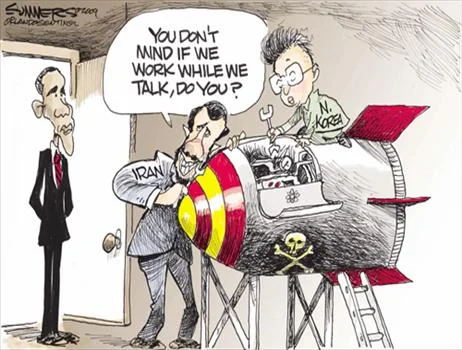
About the difference of perspectives between Israel and the US when facing the Iranian threat, and why Libya and Syria don't get the same deal.

------- A friend of mine wrote me a message asking about the relations between Israel and the USA in the context of the Middle East and the Iranian threat. It is followed by my response.
What's the comfort level in Israel with President Obama's so-called strategy vis a vis Iran? We don't know what to make of it over here. A few months back we were smacking the hell out of the Libyans for humanitarian reasons. Now we're posturing while Syrians are being massacred by their leaders. I think our message is "we'll take care of the little bullies, but when it comes to the big ones who push back you're on your own." Your thoughts?
------ My response
Well ****, President Obama is obviously doing what he believes is best for the United States of America. Having said that, albeit the long standing friendship between the two nations, what's best for the US is not always best for Israel. Obama says he's not practicing containment, but he is, though it is as much as every democrat administration in the US has done in the past, so little surprise there.
On the Israeli side of the map, things look very different from here. Here Israel is facing a autocratic regime with a record of 30 years of hostility, bluntly declaring it's desire to 'wipe the Zionists off the face of the earth'. This regime is currently lacking the ability to do so but is steadily working at it. Israel's experience with these type of threats thus far has been very positive: In 1981 a nuclear facility in Iraq was blasted from the air and in 2007 a Syrian similar facility was destroyed in the same manner. On both occasion Israel operated on its own, regardless of American objections, and succeeded in preserving a balance in the weapons race of the middle east, so claimed by foreign press.
Though the Iranian enterprise is much different from the ones mentioned above in its complexity and the right approach to destroying it, it still presents the same threat for Israel - annihilation. Therefor you can understand the reluctance of Israel to wait till the last second before attempting to resolve the issue. Notwithstanding the risk of opening a full scale war in the region, Israel prefers a preemptive strike on its own terms.
That being said, it is not necessarily the right course of action in order to rid Israel and the world of the Iranian threat. A skillful eye would notice that efforts to delay nuclear accomplishments in Iran are side by side with efforts to support a regime change in the country. The intent behind such maneuvers are not just to have Ahmadinejad step down, something that may happen in any case in the near future, but to facilitate any alternative, hopefully a sound and rational movement, to take the place of the Ayatollah regime. This perception allows for nuclear development but in the hands of a responsible government.
As far as the difference between Libya and Syria, the answer is simple and sad: oil, or the lack of for the latter. But this might not be a bad thing. Learning mistakes from past affairs - Iraq, Afghanistan - is crucial in the paradigm of western involvement in Arab/Muslim/Middle Eastern problems. In the Libyan case this was demonstrated in a sense: western involvement was kept to exterior parameters, and to preserving proper conduct of war. In a way it was basically leveling the playing field. This allowed for a leadership to rise from the ashes, and for some sort of accountability in post revolution times. The situation in Syria is much different.
Syria is marked by a non unified society that its only cohesive factor was the government. There is no real leadership to take the wheel against Assad, thus there is no one figure for the west to support. Whether such a leadership will develop, perhaps a coalescence of FSA and the SNC, time will tell. Until then the west' best move is to steer clear of direct involvement. Having said that, there is much to be done under the guise of humanitarian relief.
I think the main tones of my answer are these: The US has to understand that this region needs to consider its own interests first with local matters, especially when it comes to security, and that things which are apparent here, are not always obvious from over there.
Wells Blog
Duis mollis, est non commodo luctus, nisi erat porttitor ligula, eget lacinia odio sem nec elit. Maecenas faucibus mollis interdum. Nulla vitae elit libero, a pharetra augue.


Vivamus pellentesque vitae neque at vestibulum. Donec efficitur mollis dui vel pharetra.