
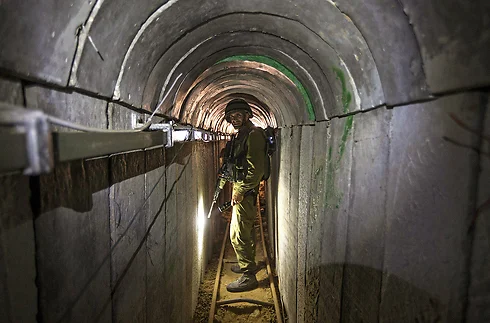
The book of war between Hamas and Israel, chapter 2014.
The last month of battles in Gaza and South Israel is only a link in a chain, years long. This ongoing situation is perpetuated through several factors, and accountability lies within the Palestinians, Israel, the Arab world and the international community. While Israel and Hamas are still at the negotiating table, and have declared that the fighting has not ended yet, lessons can be learned about the elements that brought them here, and where their paths are leading.
The book of war between Hamas and Israel, chapter 2014.
The last month of battles in Gaza and south Israel is only a link in a chain, years long. This latest skirmish, Protective Edge, has showed us that there is a struggle between a terrorist organization fighting for its political survival, Hamas, against a country that is committed to protecting its citizens, Israel. This ongoing situation is perpetuated through several factors, and accountability lies within the Palestinians, Israel, the Arab world and the international community. While both sides are still at the negotiating table, and have declared that the fighting has not ended yet, lessons can be learned about the elements that brought them here, and where their paths are leading.
The latest round of fighting between Hamas and Israel began when Hamas was at the end of its political rope. After many of its members were arrested in the west bank, following the kidnapping and killing of the three Jewish Israeli teens by a Hamas cell, Hamas started firing rockets from Gaza onto Israeli cities. At the end of weeklong warnings by the Israeli government, when those were not adhered to, Israel launched a reactive strike on Hamas. Hamas utilized 32 attack tunnels to infiltrate Israeli communities, and fired more than 3500 rockets on Israel in various ranges of up to 100km, but because of the Iron Dome system, civilian casualties were kept to a minimum. Israel has hit about 4800 militant targets in Gaza. 64 IDF soldiers and 3 Israeli civilians were killed; about 1000 Gaza militants and about 750 civilians were killed on the Palestinian side, during the month of battles.
The Palestinian people of Gaza, for the most part, have refused to denounce Hamas for the death it has brought to their homes. Granted, that is probably the most difficult to change element, since Hamas uses inhuman tactics to enforce its power and force itself on the powerless people of Gaza. For example, a few days ago I was informed by a Palestinian acquaintance that Hamas is harassing and has executed several Fatah affiliated Gazans, as a retaliation for the lack of political achievement in the latest campaign.
Another factor is the toleration of Hamas and its affiliates and their actions by the international community, primarily the EU and the UN. While the trigger finger on boycotting Israel has been very light, the international community has not taken serious steps against Hamas. Such actions on their behalf would potentially help end the killing of Palestinian civilians serving as human shields for Hamas when it fires its rockets and digs its attack tunnels from their homes, schools, masques and sanctuaries. Despite the fact that they performed a violent military coup against the PLO in Gaza in 2007, removing Hamas from power has no real international backing, mainly because Hamas won the elections a year before the coup, and formed a unity government with the Fatah as of late.
The Middle East is going through drastic changes and the dust has not settled yet on all of the shifts the different nations are going through. While in Egypt Hamas was declared illegal, in Lebanon and Syria it has made its peace with Hizballah and the Assad regime, and is now receiving aid from Qatar once again. If the Palestinians would choose a future without Hamas, as Egypt did, the Middle East would need to align with their wishes, and stop funneling money through the organization. Today, money that is devoted to building Palestinian cities and bettering Palestinian lives in Gaza is being taxed by Hamas to build its infrastructure and weapons. That in its self is a war-perpetuating agent.
Some experts claim that if Hamas gives up its militant ways and leaves the path of the "Armed Struggle" like Fatah announced in 1993, it would stand a better chance for political survival, and would benefit its people much more than it had until today. However that does not seem to be an option Hamas is willing to consider.
On the Israeli side of the matter there are a few factors that are inconducive to the resolve of the situation as well, though those relate to the Palestinian motivation for supporting Hamas, and therefor do not carry much weight on the actual militant conflict, as I've mentioned above. Israel has managed the crossing from and to Gaza through the Israeli borders, and has made it possible for medical, familial, business, and Political related passage. However, the process is difficult and lengthy due to security measures and is disrupted whenever there is strife with Hamas, and so it creates discontent and aggravation with the Gazans who are using it, or would like to. Furthermore, products that are imported into Gaza from Israel are priced according to the Israeli living standard, which is expensive for Gazans. As long as Egypt keeps the Rafah crossing closed to Gaza, Palestinians cannot enjoy the same quality of life they had before, when the crossing was open for Egyptian goods and human traffic. However, the Rafah crossing was controlled and taxed by Hamas, allowing it to pass arms both ways, and that is why the Egyptians closed it. Finally, the stranded peace process between Israel and the Palestinian Authority does effects Gazans as well. When they see the President of the PA, Mahmud Abbas, failing, and Ismail Haniya, Head of Gaza's Hamas government waving the resistance flag, Gazans opt for the uncorrupt, only other option in the Palestinian politics: Hamas.
Hamas rcoket launching pad next to hotels and civilian residence.
Monitoring the efforts made by Israel to avoid collateral damage, and to prevent civilian casualties when targeting the Militants in Gaza, one can conclude that in general the laws of war that apply here allow an army to return fire to the exact location from where it was fired upon. In most of the cases I've studies, the retaliation of the Israeli army was against specific leaders of the Terrorist organizations, at their command posts, homes, or vehicles, and against active militant posts such as launching pads, missile storage, and underground attack tunnels. That being said, it is quite difficult for any army to avoid mistakes completely, and that is probably the case in a number of incidents that resulted in the death of innocent civilians. In most cases I've followed, rocket fire and attack tunnels originated from populated areas within the Gaza strip to create a sympathetic image of Hamas with the international community, when the IDF struck back and innocent civilians were hit by the collateral damage.
Coming to the end of this round, despite its rigorous efforts, Hamas has not been able to secure a victory image, and has led its people into a disastrous situation. Now, through negotiation, Hamas needs to gain at least three achievements in order to survive: 1. Getting financial support, so it can pay its people's salaries, and for the rebuilding of its infrastructure. 2. Opening the Rafah crossing with Egypt, to appease the Gazans and make sure Hamas has a steady income and a free passage of its leadership. 3. Freeing of Palestinian prisoners from Israeli jails, to regain popular support in the West Bank, or some sort of a similar gesture. Hamas is always in competition with the Fatah, as much as the "Armed Struggle" ideology is competing with the political discourse one. These achievements can facilitate its resurrection in the Palestinian political arena, and possibly allow it to return to the Egyptian warm embrace. Meanwhile, Mahmud Abbas is asked to take charge over Hamas strongholds such as the Rafah crossing, and is possibly the Palestinian who gained the most from this situation.
Israel comes out with the upper hand after this campaign, but at a higher cost than the last two rounds, Cast Lead (2008-9) and Pillar of Defense (2012), with 67 killed and hundreds of casualties, and great financial loses. With the help of Egypt, Israel would like to keep Hamas's political achievements to a minimum, while managing to avoid recognizing it as a legitimate partner in negotiations, and has been successful at that thus far. However Israel would have to face the growing discontent within the Israeli people, residents of the war zone, that demand a life free of rockets and tunnels, while that war zone expands through this latest skirmish to Tel-Aviv, Jerusalem and even Haifa.
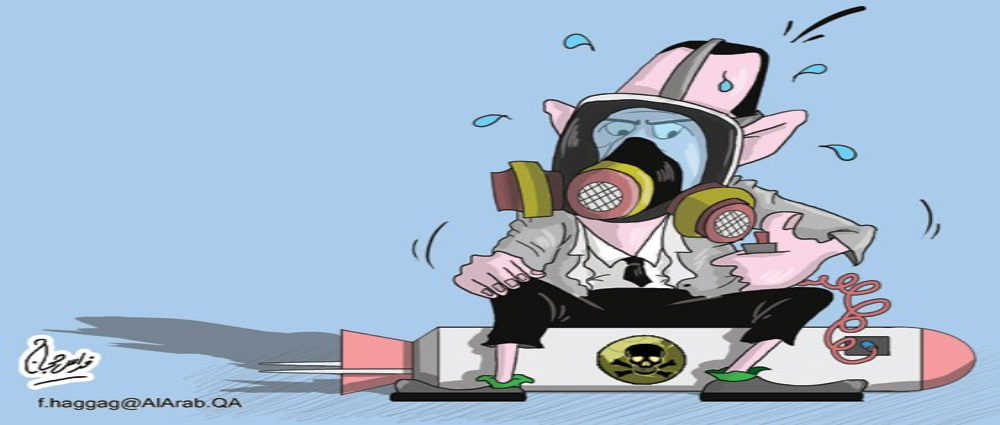
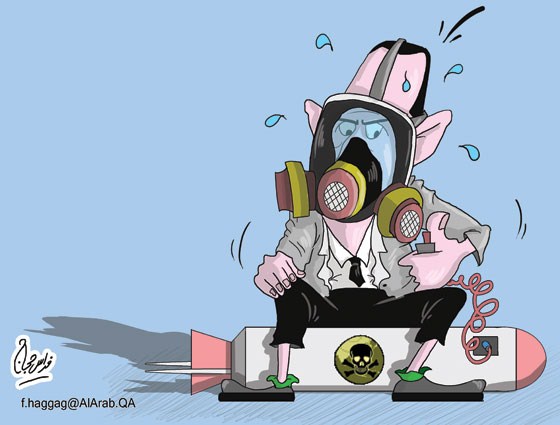
Syrian Chemical Weapons of Mass Confusion
Why we are so obsessed with the slight possibility of an indefinite movement in some obscure weapons storage facilities, but could not care less about the 300 Syrians that were killed today, and how it is firmly connected to the cross Islamic war that is afoot in the Middle East.
Over the course of the last few days several articles were published
on the Syrian chemical weapons, the initial two in the New
York Times[1],
and in The
Atlantic[2].
On the basis of intelligence information, these articles indicated that some
movement was detected recently in the chemical weapons facilities in Syria, and
that Israel asked twice for Jordanian consent to attacking those facilities
over the last month. It was also mentioned in the past by specialist that in
order for those weapons to be used, there are several steps that need to be
taken first, such as transferring the different agents, which are never stored
together, and mounting those on a weaponized carrier. Same experts stressed
that the Syrian chemical weapons cannot be deployed instantly, and such
movement would point to a potential motivation to deploy them.
The unstable situation of civil war in Syria makes these weapons of mass destruction a potential hazard to Syrians, but also to the surrounding nations as well. While the global community fears Assad's loyalist would use these against the Syrian people as means of last resort, a chemical expression of Assad’s ‘Let my soul die with the philistines’, there are also other concerns in the region. Turkey suspects that Assad would bomb areas close to its border, allowing for collateral damage to spill over and leaving Turkey to deal with the catastrophe. Israel fears that these weapons might be passed on by Assad to his allies, the Hizballah, equipping this extremist Shiite organization on its border with a tiebreaker weapon.
Further concern can be attributed to the fact that global jihadist, of the Al-Qaida variety, are a part of the opposition fighting Assad's troops. These kind of weapons falling into those kind of hands can find their way to be used in a variety of scenarios such as in Iraq against the Shiite population, in Egypt against the Mursi administration, in Saudi against American targets, or against any of the numerous enemies the Salafi oriented Jihadist groups have vowed to destroy.
To collaborate these suspicions, one has just to examine the aftermath of the Libyan "Arab Spring", and to follow the trail of the missiles, anti-aircraft/marine vessel guided weapons, and other munitions, that left storage rooms in Libya, and surfaced in Sinai desert, on trucks in Sudan, and in other parts of the Middle East. Such weapons were used against Mursi's army by Jihadist groups in the latest round a couple of months ago. These are the same type of weapons that were used against the IDF, the Israeli army, by Jihadist crossing over from Sinai into Israel. These are of the same Salafi oriented groups that were responsible for the death of the American Ambassador to Benghazi, and the Al-Qaida cells that are responsible for the incredible death toll in Iraq that reached 365[3] in last September as a result of the attacks on Shia civilian targets.
On the macro scale, the chemical weapons situation marks the concerns about post-Assad Syria. It is obvious to the different actors in the region that Assad’s days as the ruler of Syria are numbered, but it is quite in the mist what shape will the future Syria take. Currently, the struggle of the last relic of the Ba’ath socialist regime in the Middle East, for the most part has turned into a cross Islamic war between Sunnis and Alawite-represented-Shiites. In the mind of the Ayatollah regime in Iran, this is a battle for the geographical integrity of what the King of Jordan, King Abdallah, referred to as “The Shiite Crescent”, a connection between the Shiite communities in the different countries in the Middle East. This battle is already underway in Iraq, and does not seem to be coming to its final resolution in the near future.
Concerned parties are wondering whether driving Assad away, will actually bring a halt to aggression, or will it in fact turn Syria into an extension of the battle waging next door in Iraq. It is yet uncertain whether the Shiite hegemon of the region, Iran, will give up its ally along with a convenient land bridge to its proxy army, the Hizballah in Lebanon, or will it continue to send in the Revolutionary Guards in order to maintain some sort of a supply route across Syria. On the other hand, there are also concerns that the strife will continue to spill over to the other Shia-Sunni mixed countries in the region, as it has in Lebanon and Bahrain over the last few months. It seems that not only the Syrian people are fighting for their future, but also the Islamic Jihadist, and the Shiite Crescent.
[1] http://www.nytimes.com/2012/12/03/world/middleeast/syria-moves-its-chemical-weapons-and-gets-another-warning.html?_r=0
[2] http://www.theatlantic.com/international/archive/2012/12/israel-asked-jordan-for-approval-to-bomb-syrian-wmd-sites/265818/
[3] http://www.reuters.com/article/2012/10/27/us-iraq-violence-idUSBRE89Q05O20121027
Wells Blog
Duis mollis, est non commodo luctus, nisi erat porttitor ligula, eget lacinia odio sem nec elit. Maecenas faucibus mollis interdum. Nulla vitae elit libero, a pharetra augue.


Vivamus pellentesque vitae neque at vestibulum. Donec efficitur mollis dui vel pharetra.